Comparisons
The Hidden Math of Free Automation Plans
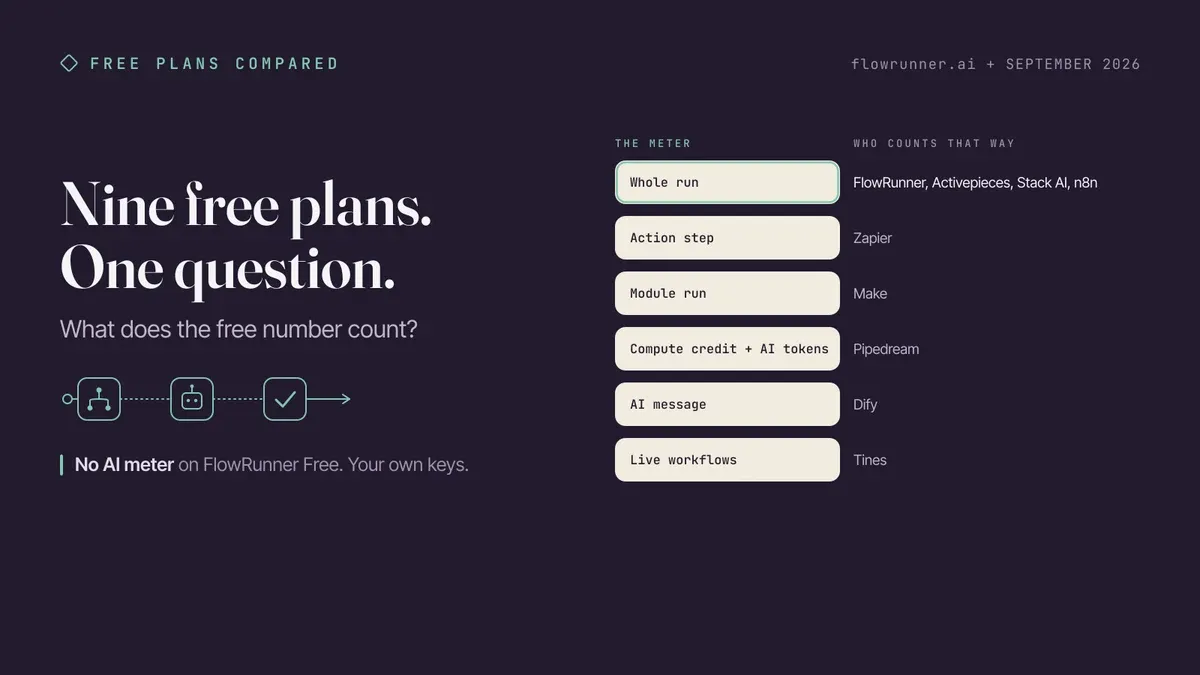
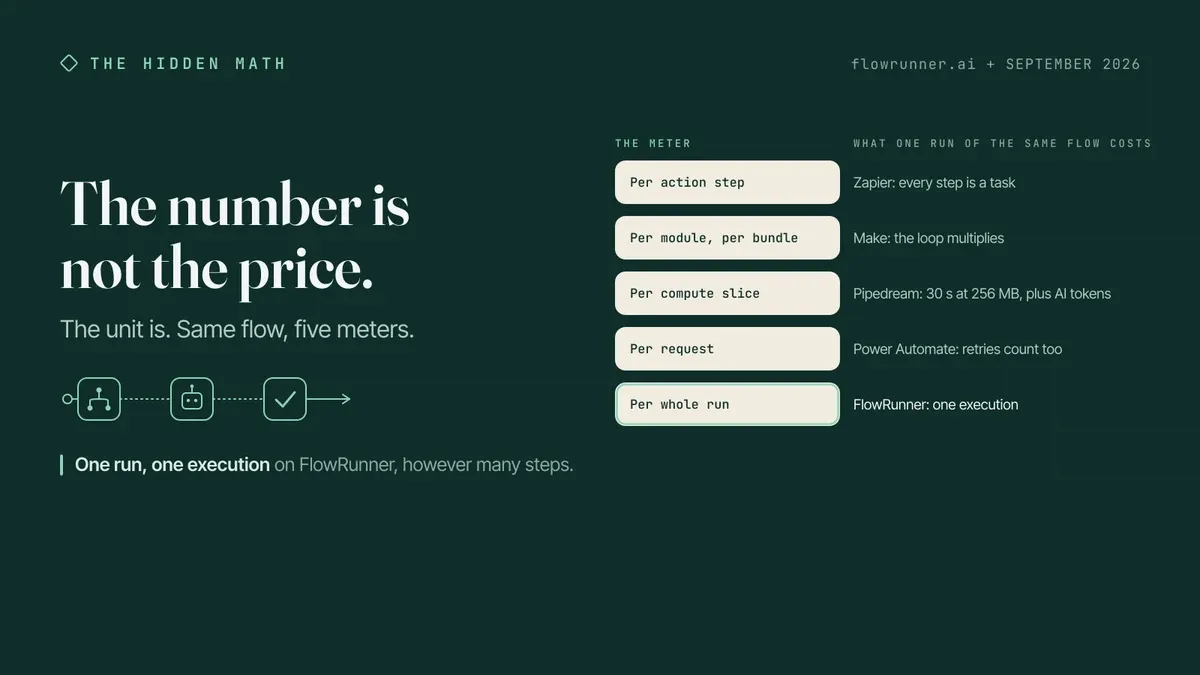
One ten-step invoice approval costs 10 tasks, 16 credits, 11 requests, or 1 execution. Free plans differ on the unit, not the number.
Practical perspectives on AI automation, operations efficiency, and building workflows you can trust.
One ten-step invoice approval costs 10 tasks, 16 credits, 11 requests, or 1 execution. Free plans differ on the unit, not the number.
Nine platforms have a permanent free plan in 2026. What separates them is not price but what the free number counts: runs, steps, modules, or credits.
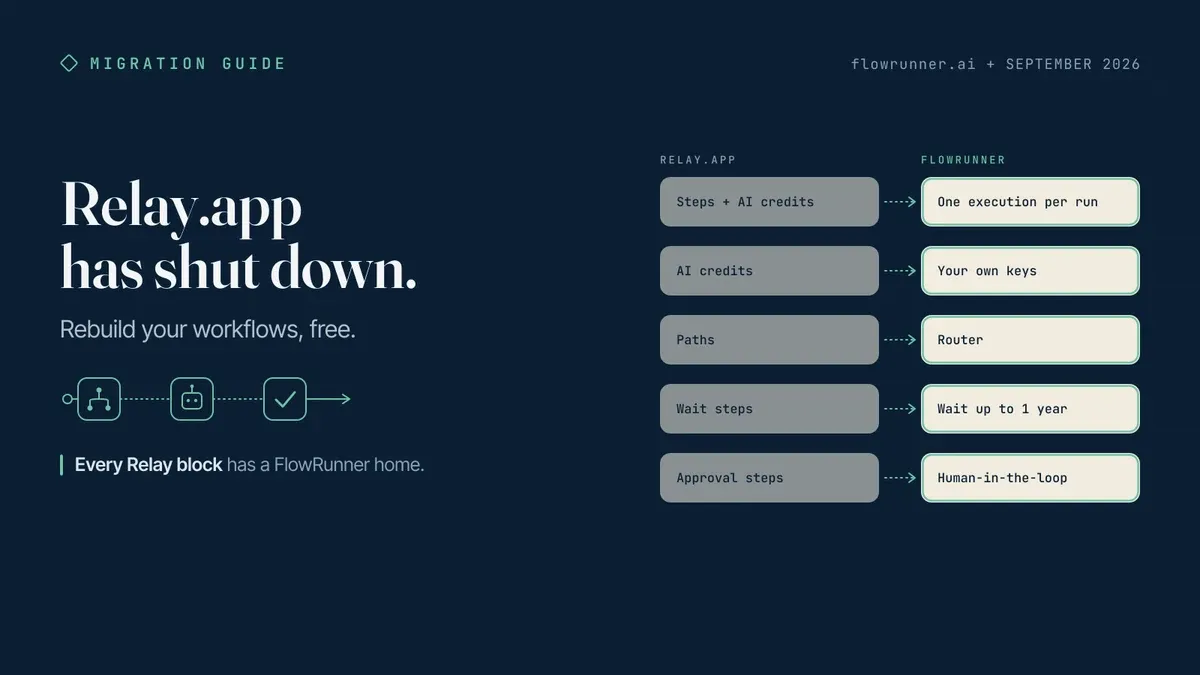
Relay.app closed on September 14, 2026. What your export contains, how each Relay building block maps to FlowRunner, and how to rebuild on a free plan.
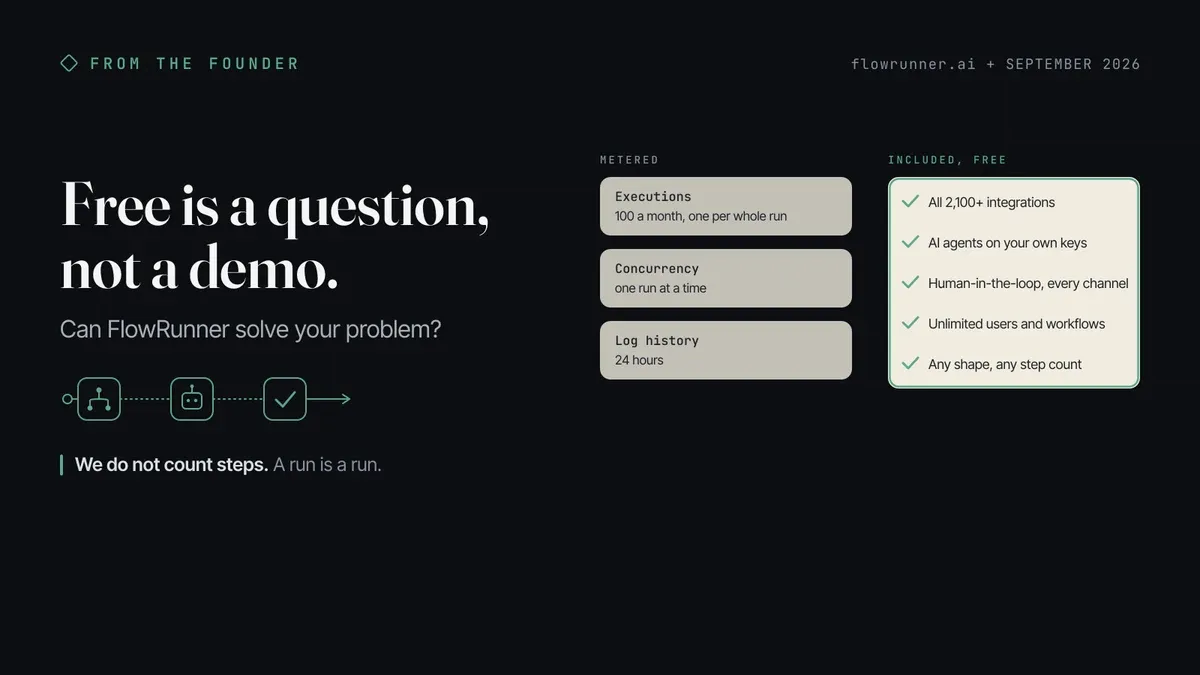
A free plan has one job: answer whether the thing solves your problem. Ours meters executions, concurrency, and log history, and gates nothing you can build.
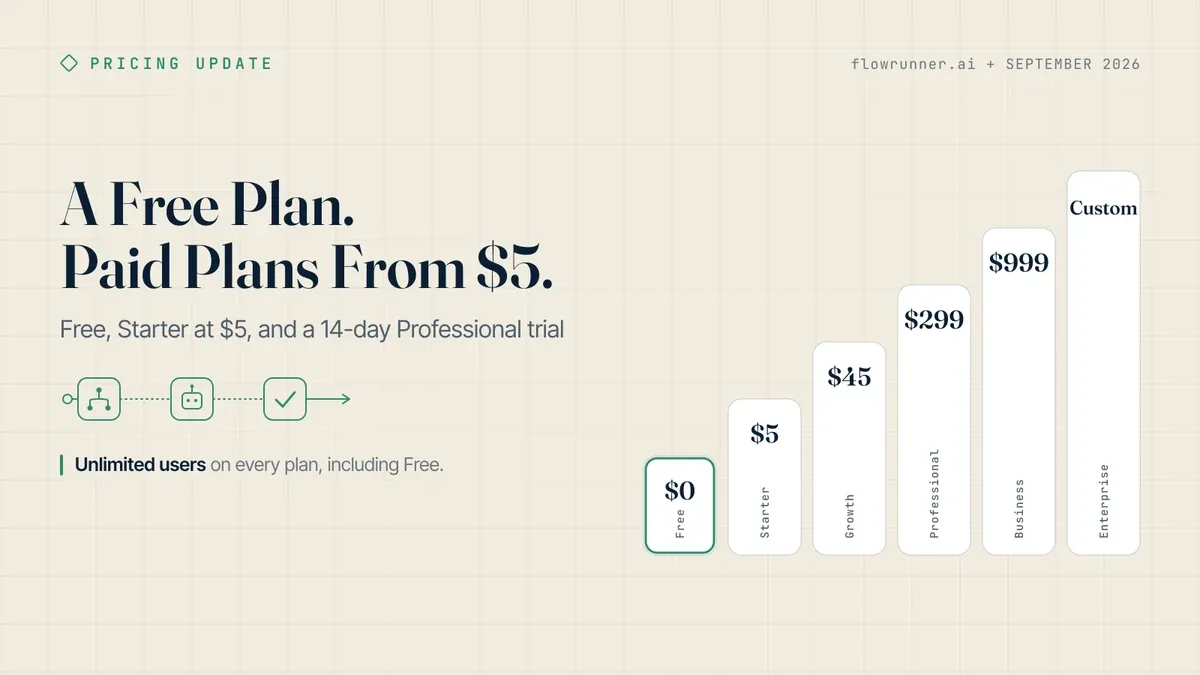
FlowRunner added a permanent Free plan, a $5 Starter plan, and a 14-day Professional trial. Every plan keeps unlimited users, every integration, AI agents, and human-in-the-loop. Here is what changed, what did not, and why we did it.
203 new FlowRunner connectors landed, 55 built for a specific country. Seven flows on French, German, Brazilian, Czech, and Italian business software.
FlowRunner just added more than 570 new integrations, from CRM and identity to DevOps, payments, and voice AI. Here are seven flows you can build today, each with a human on the step that matters.
More than 30 AI providers are one connector each in FlowRunner, with your own keys and no markup. Here are seven flows you can build today, from cost-aware model routing to RAG over your own docs, each with a human on the step that matters.
A wave of core integrations just landed. Here are eight real flows you can build today, from order-to-books to employee offboarding to RAG over your own docs, each with a human on the step that matters.
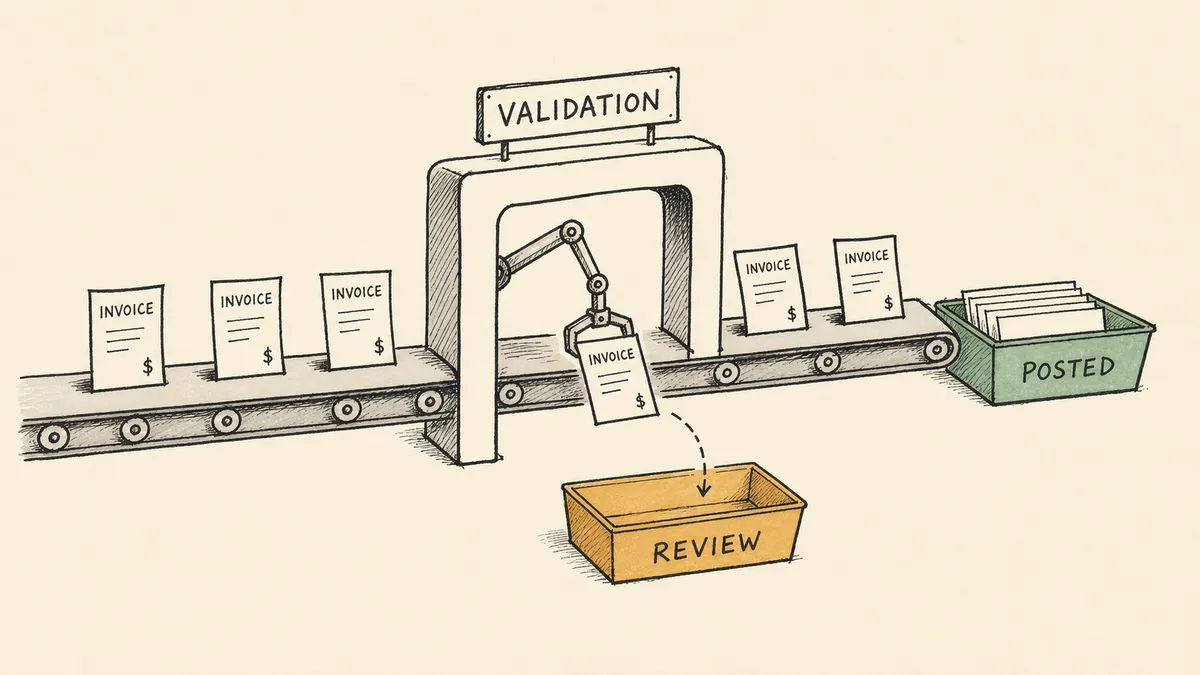
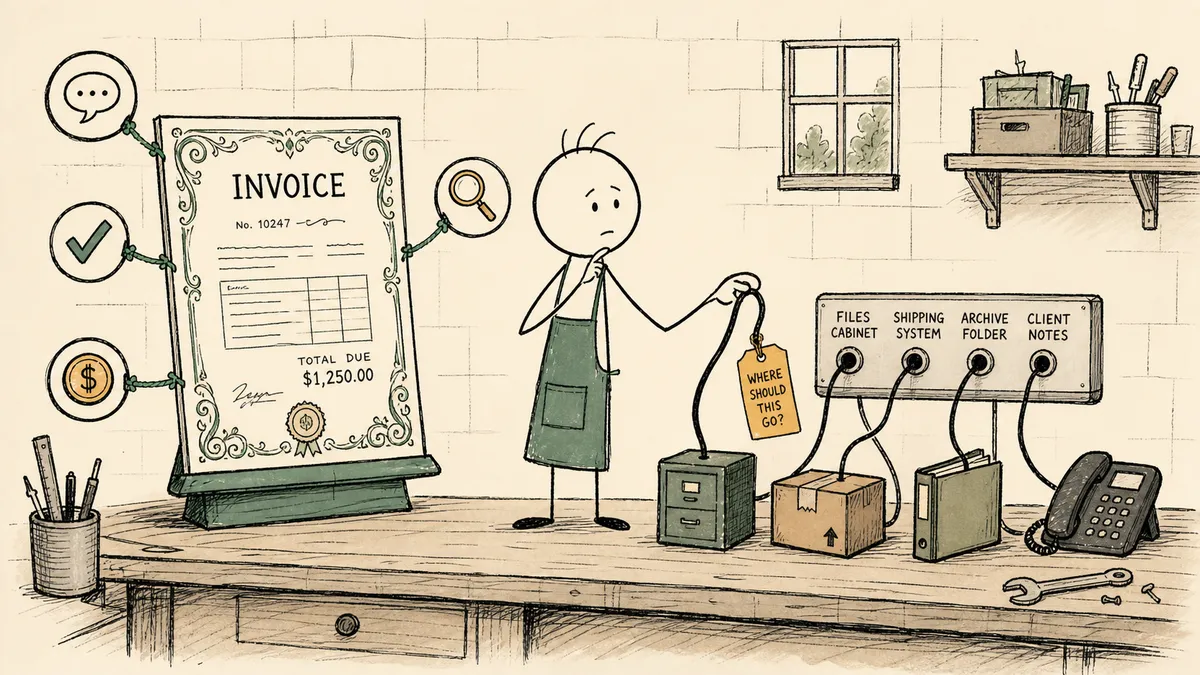
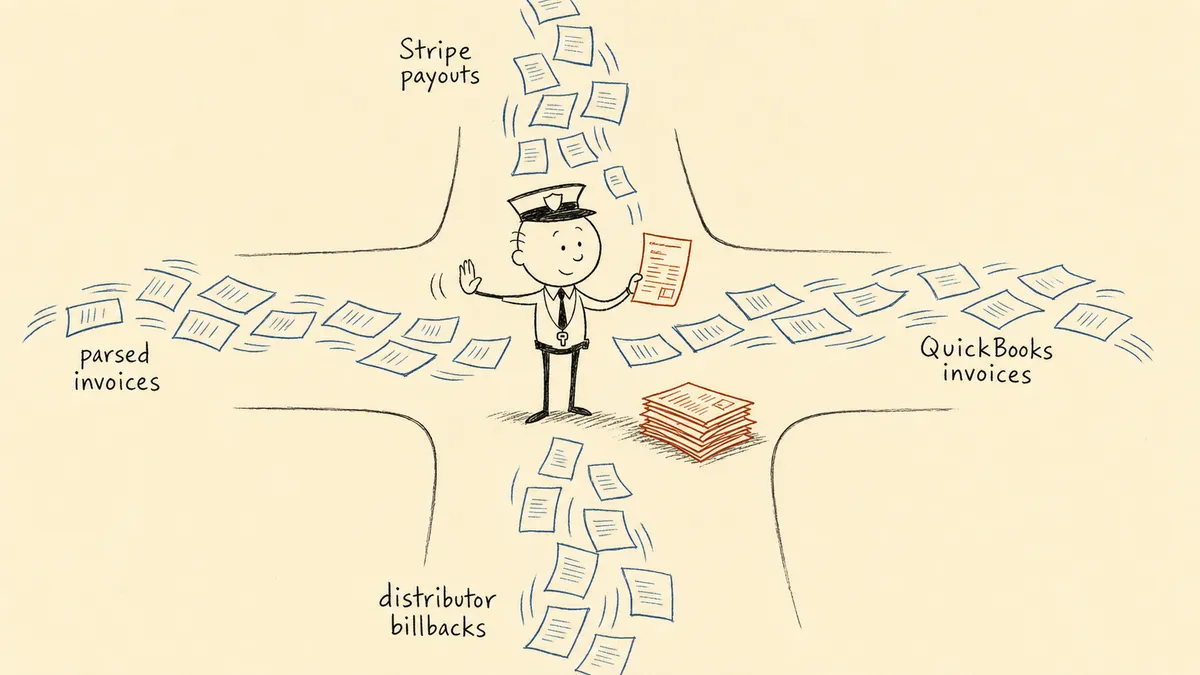
Most invoice automation sells capture accuracy. The step that protects cash is validation: catching duplicates, billbacks, and missing POs after capture.
Automated bookkeeping software is a stack of capabilities, not one product. A CFO's framework for evaluating it against your real chores, not feature lists.
Automated compliance reporting is only as defensible as the evidence under it. Capture approver, timestamp, and decision at the moment of work, not at audit.
Airbyte moves data and gives agents access to it. FlowRunner governs what the agent does with it and pulls a human in on the exception. The honest finance read.
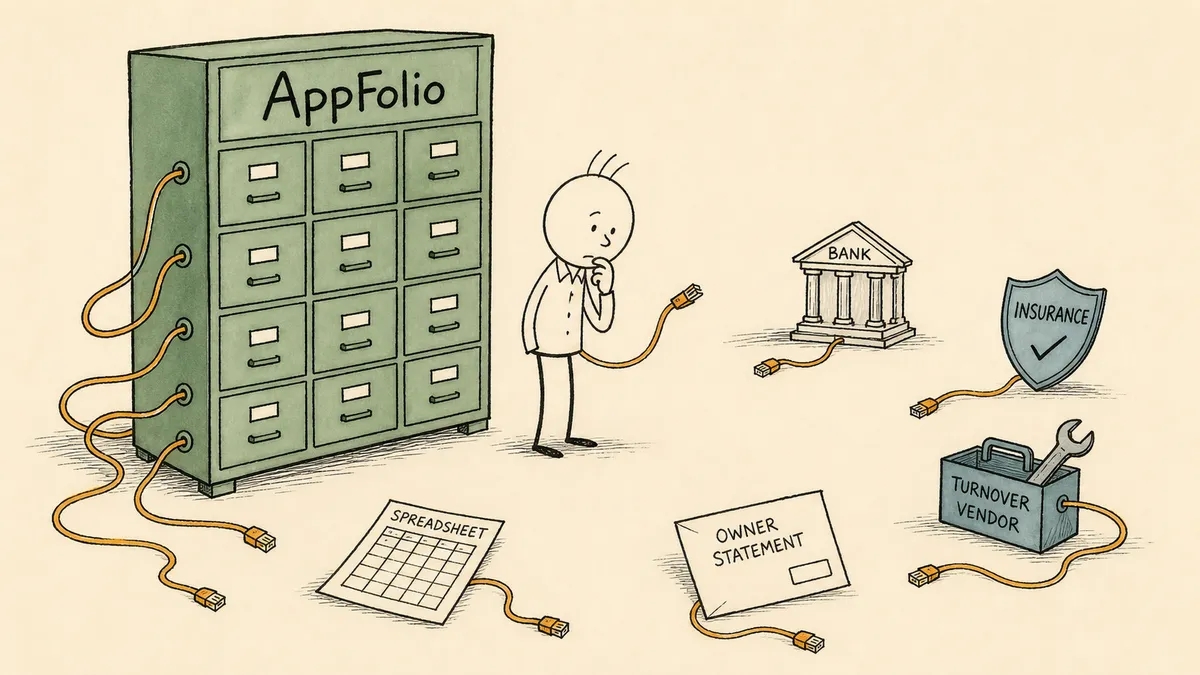
AppFolio runs your property management operation. FlowRunner coordinates the work between AppFolio and the rest of your stack. Here is how to tell which you need.
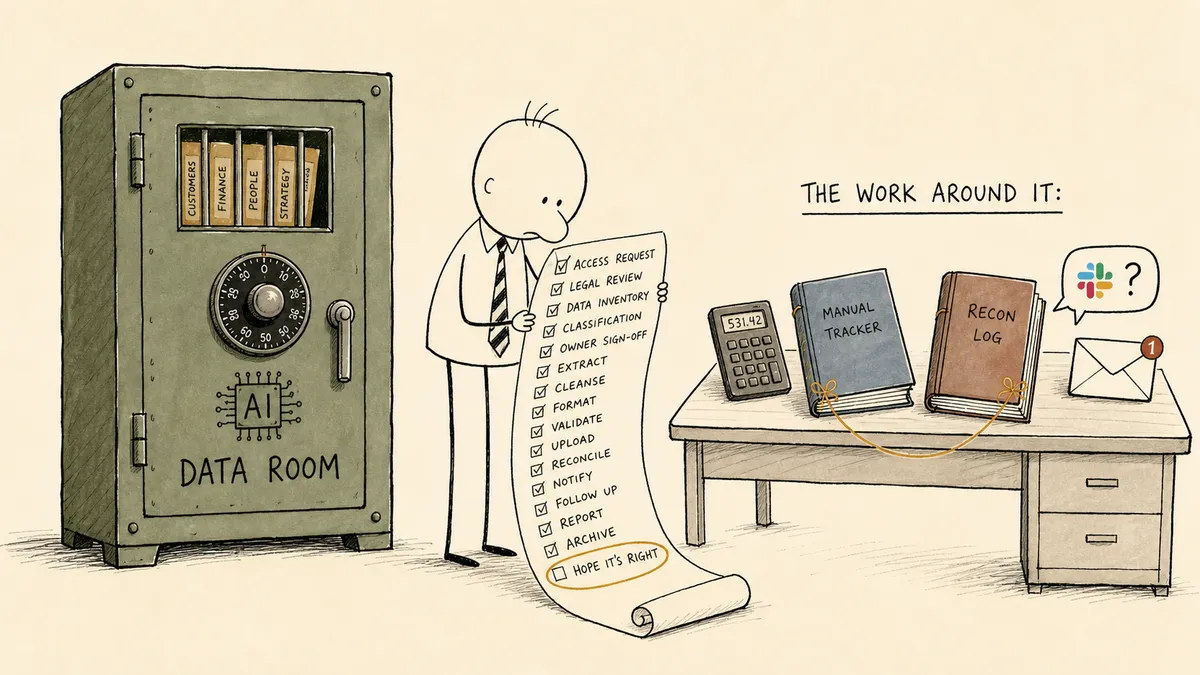
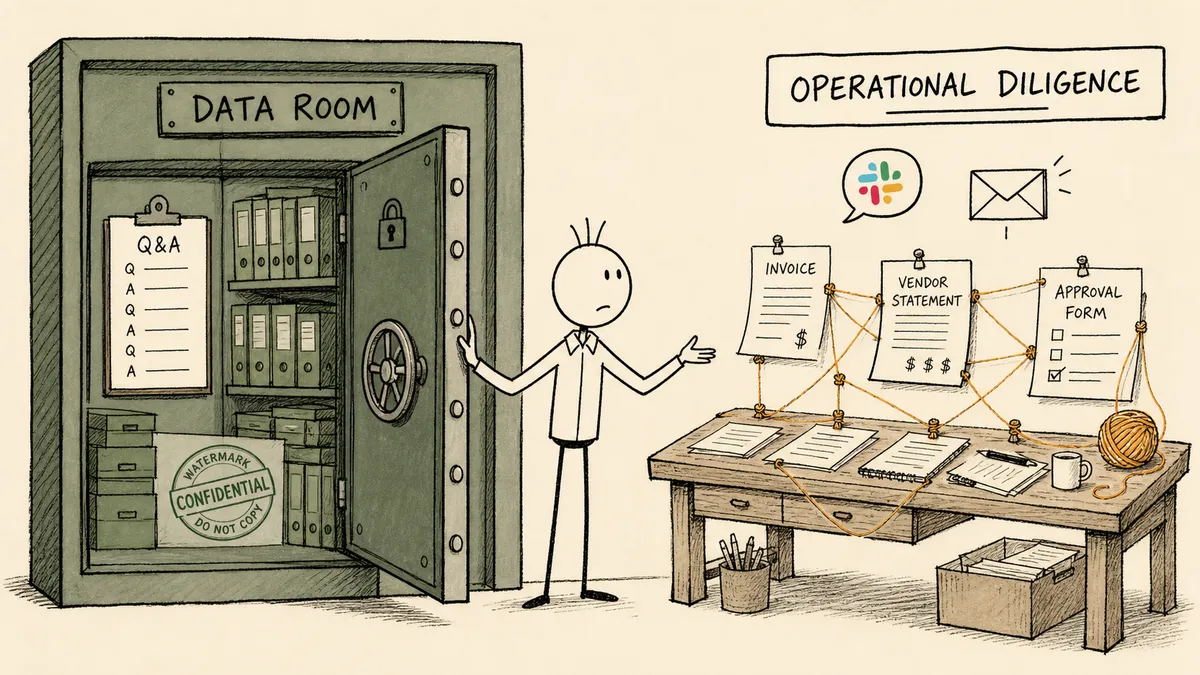
Ansarada is a 20-year virtual data room built for deals. FlowRunner orchestrates the reconciliation and approval-chasing around the checklist. How to decide.
Celigo is a mature iPaaS with 1,000+ connectors and JavaScript hooks for developers. FlowRunner is for finance teams who own QuickBooks workflows without one.
Buildium is a purpose-built property management platform. FlowRunner is the orchestration layer above it. They solve different problems. Here is how to tell which you need.
Drata is a strong continuous-compliance platform, but SOX is not in its framework list. Where a GRC tool fits, where FlowRunner fits, and when you need both.
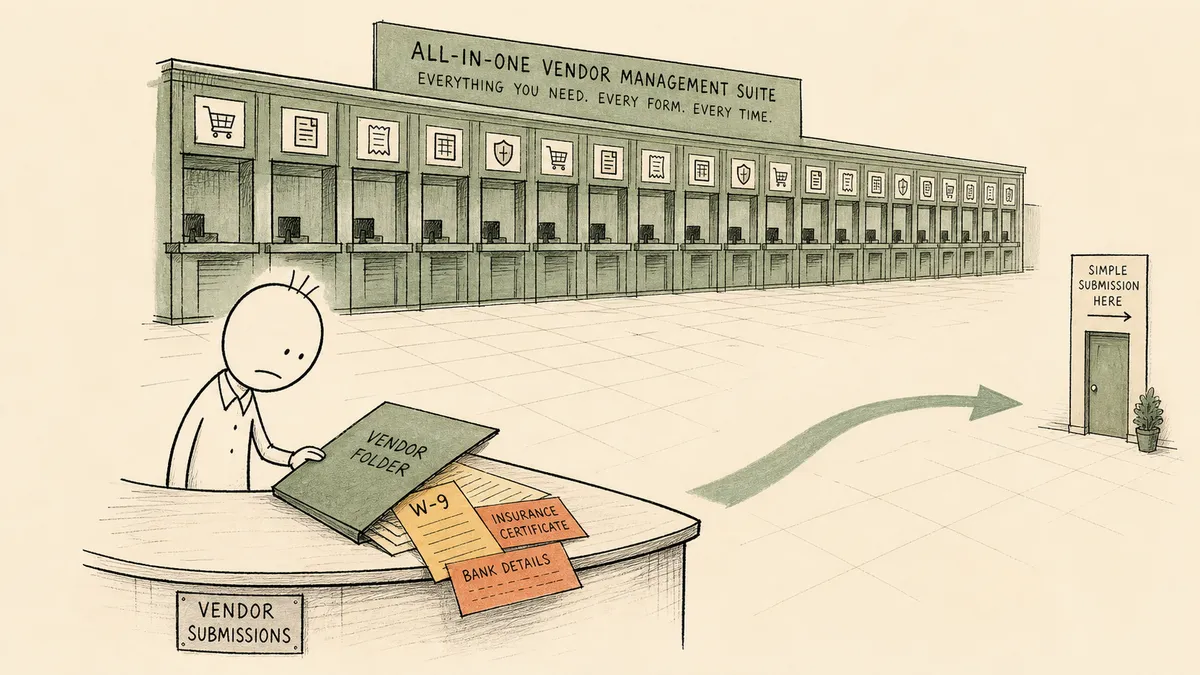
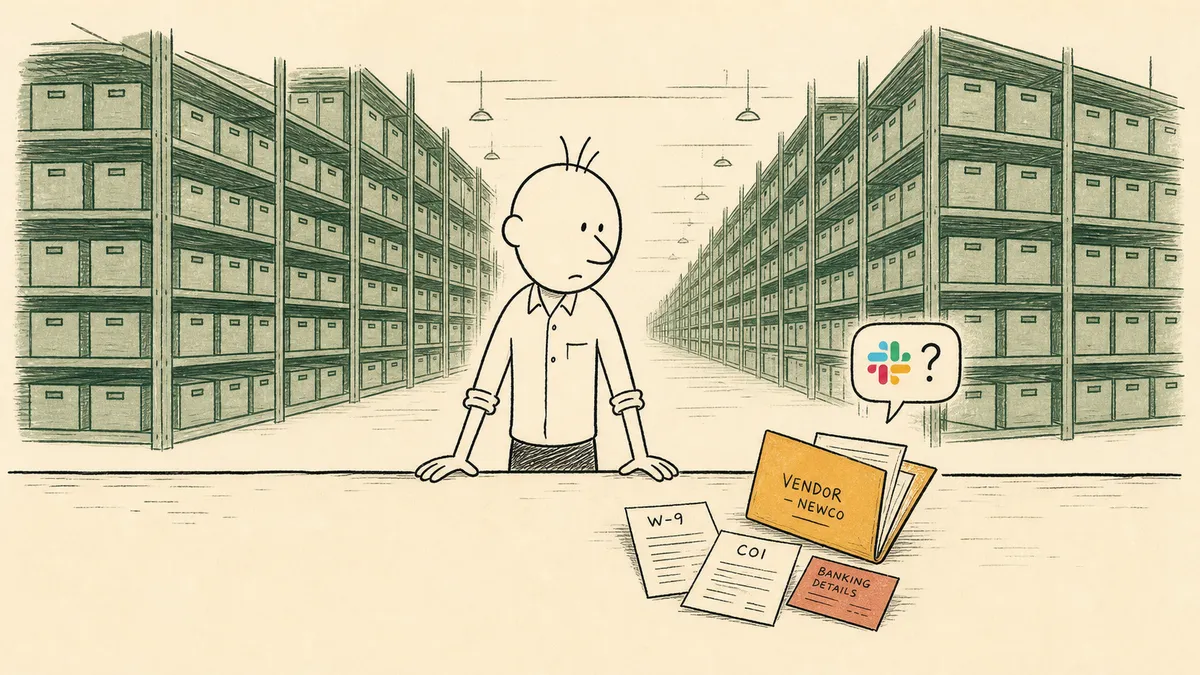
Coupa onboards vendors inside a full spend management suite. FlowRunner orchestrates onboarding across the systems you already run. How to decide between them.
Stampli wins when AP is the whole job and the invoice is the center of gravity. FlowRunner wins when AP is one of several processes to orchestrate.
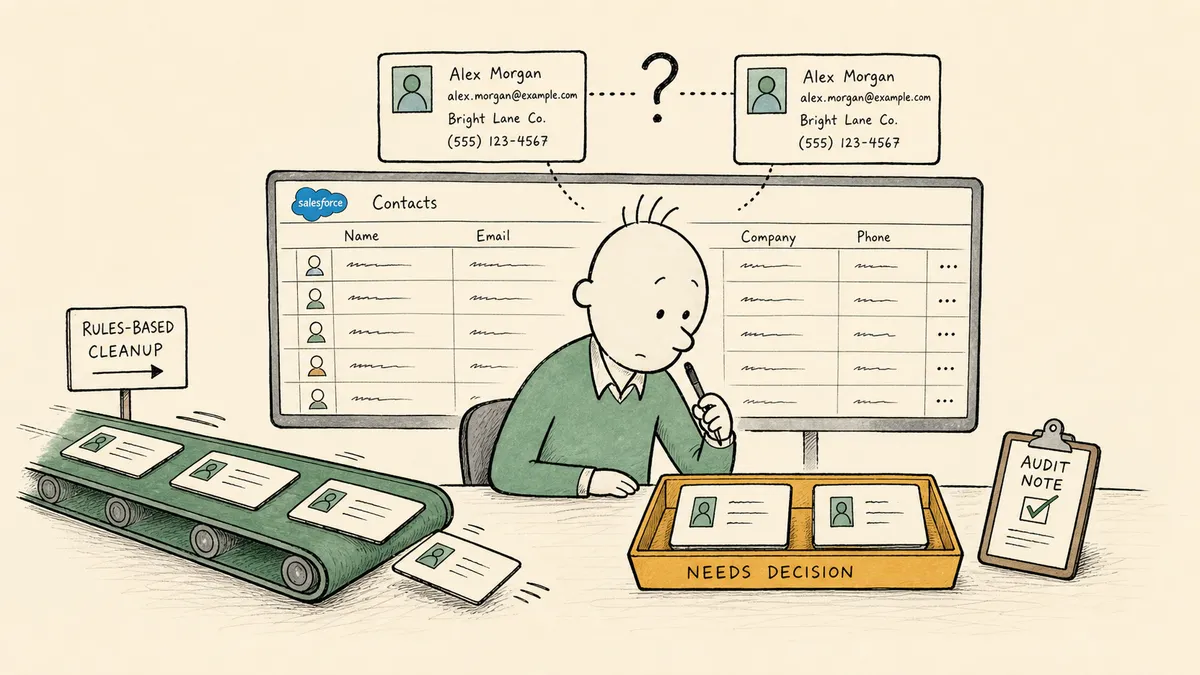
Zapier wins on app breadth and easy setup for linear Salesforce cleanup. FlowRunner wins when merge and dedup decisions need human judgment plus an audit trail.
Zapier owns connector breadth and fast setup. FlowRunner wins when a marketing workflow needs a human to approve a send or spend before it fires. How to decide.
Make wins when Salesforce hygiene is scheduled, rule-based cleanup across many tools. FlowRunner wins when merges and conversions need a human in the loop.
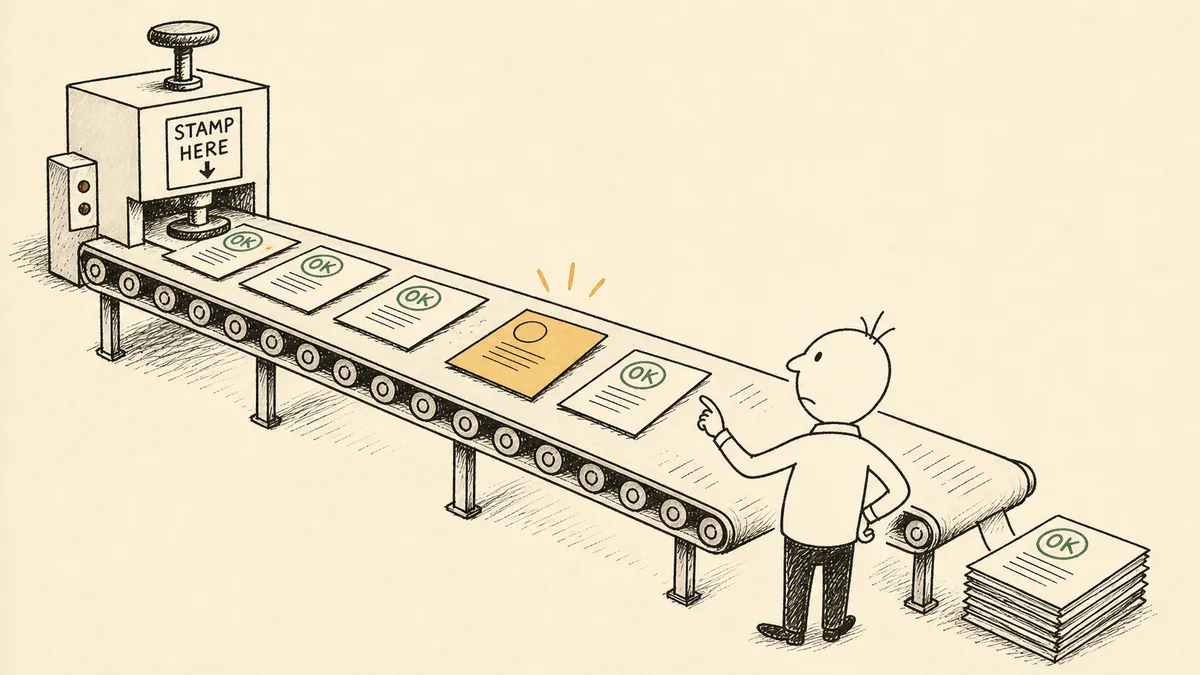
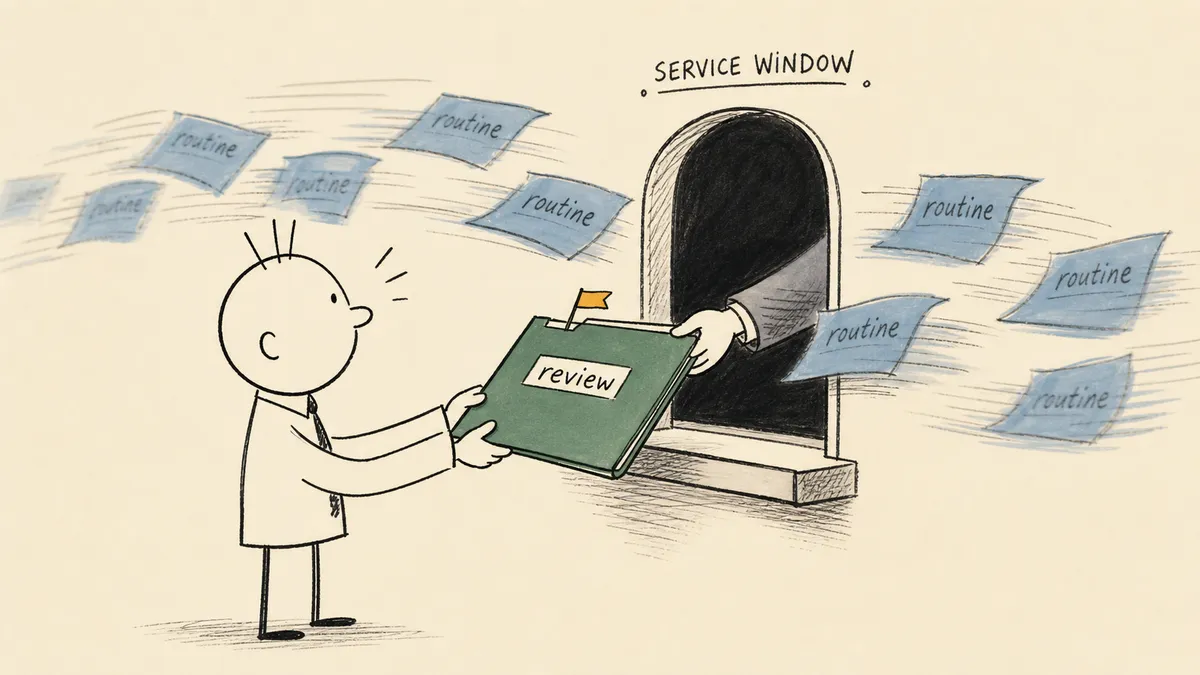
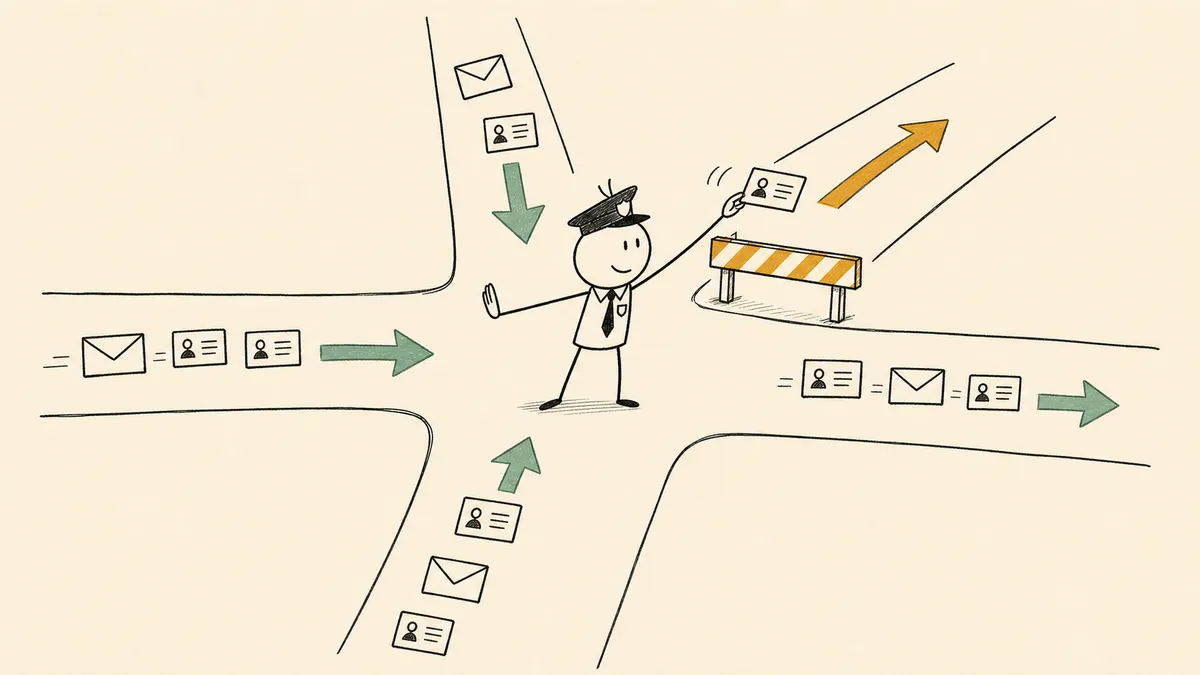
A human in the loop review is not an approval queue. It is a pause that hands one decision to one named person with the context already attached.
Most marketing automation example lists stop at the email nurture. Seven cross-tool workflows marketing ops owns, and where the human checkpoint belongs.
Property management automation is two purchases pretending to be one: the platform that runs your portfolio, and the layer for work between systems.
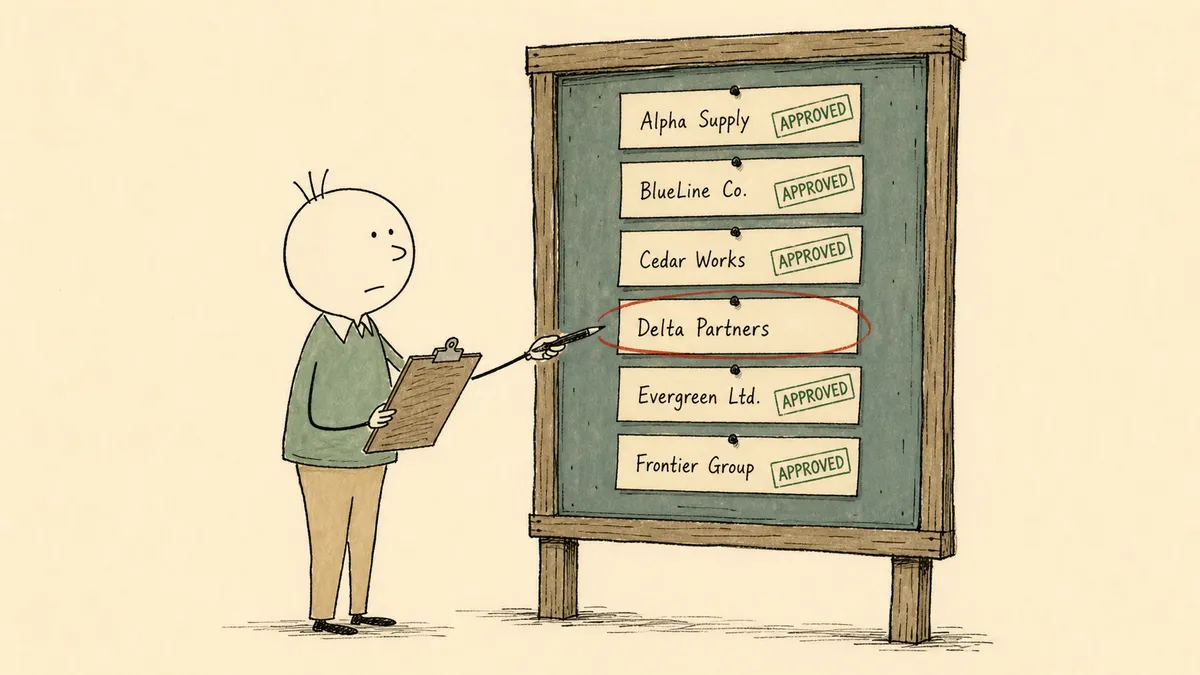
The most-repeated supplier onboarding best practice quietly creates the bypass problem. Here are the controls that survive contact with a busy team.
A Salesforce data cleansing tool means three different jobs. Which one is yours decides whether you need a batch matcher, native rules, or an intake layer.
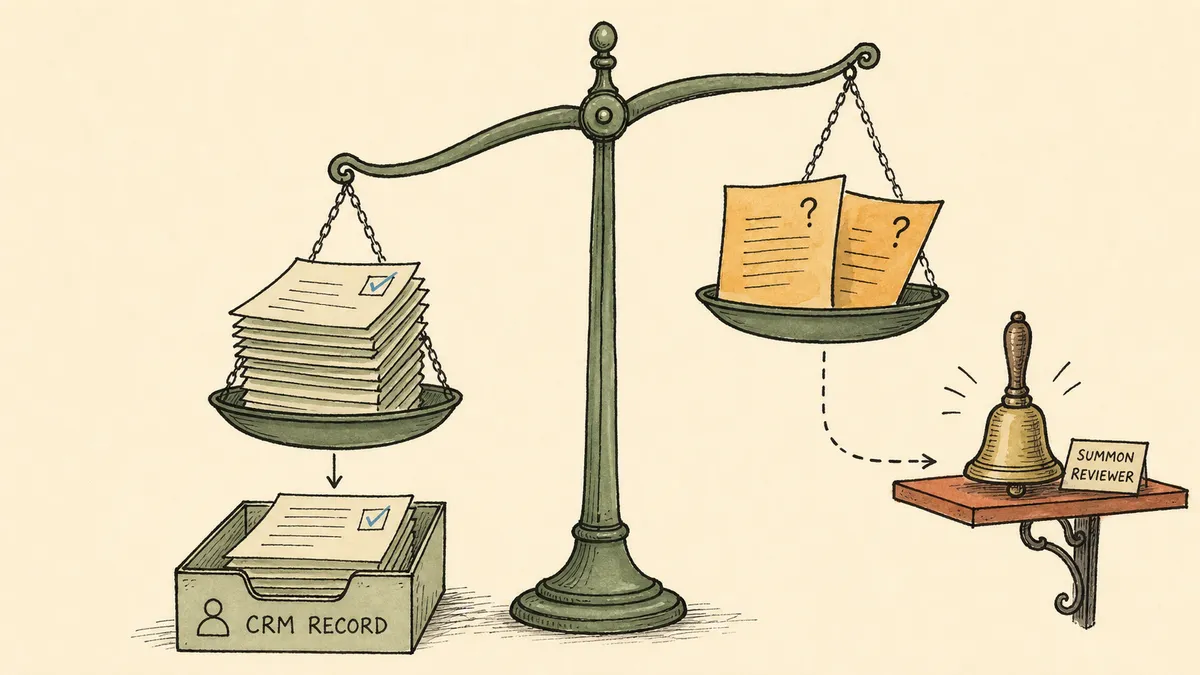
Salesforce can read a contract or order PDF. The harder question for finance is who reviews a low-confidence extraction before it becomes a CRM record.
Vendor onboarding is collecting, verifying, and approving what you need to pay a new supplier. The checklist is easy. Keeping a vendor record true is the job.
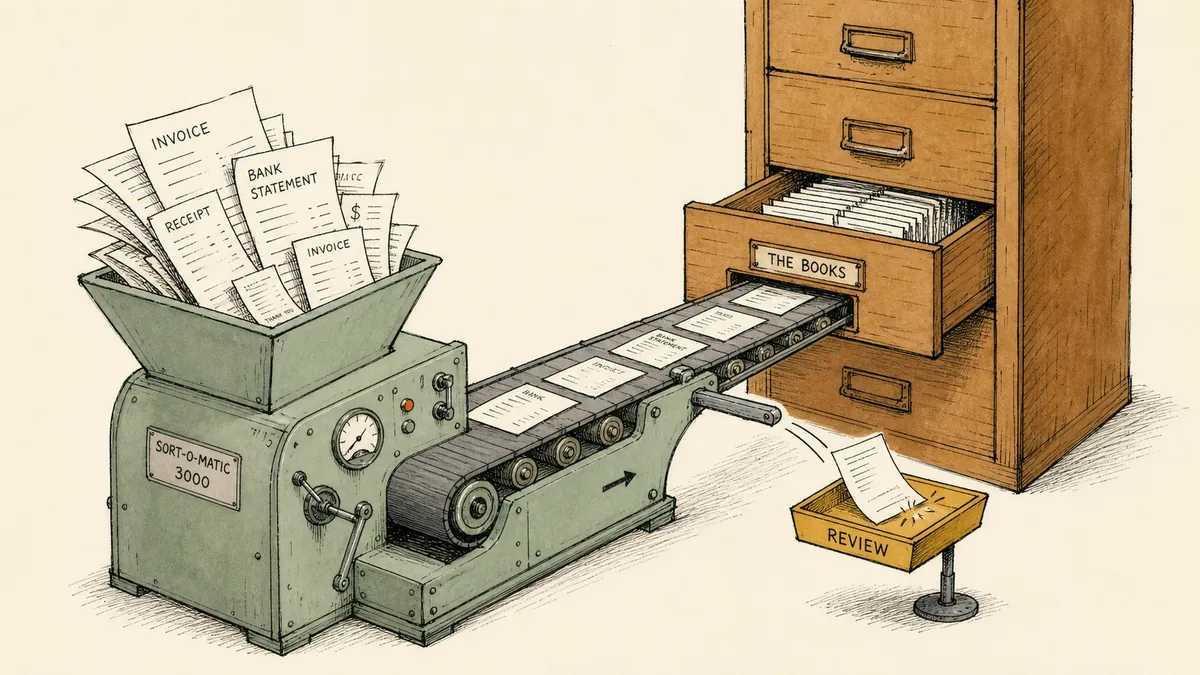
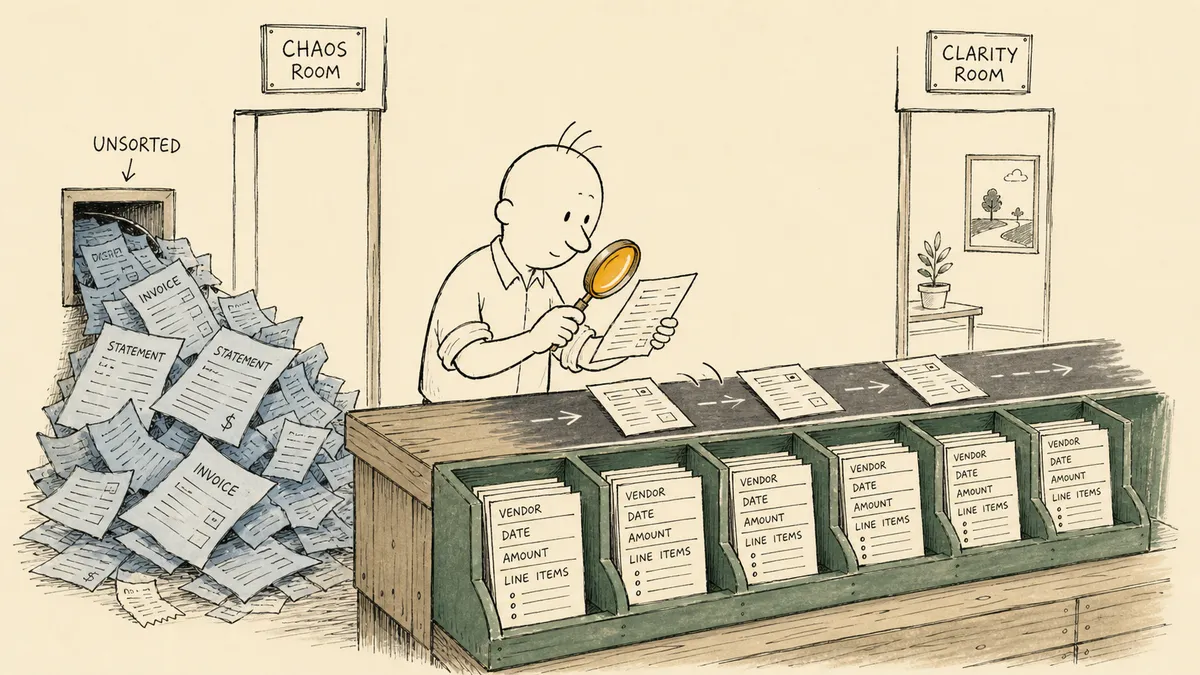
Extraction turns unstructured documents into structured fields. The value lives in what surrounds extraction: routing, validation, exception handling, and ERP posting.
A client onboarding checklist written for the CFO whose first invoice has to land clean. Signed engagement letter to revenue activation, with the gaps named.
BILL is the answer when AP is the whole job. FlowRunner is the answer when AP is one of several finance and ops processes that need orchestrating together.
BlackLine wins when reconciliation is the only problem and the buyer is enterprise F&A. FlowRunner wins when reconciliation sits alongside cross-functional automation.
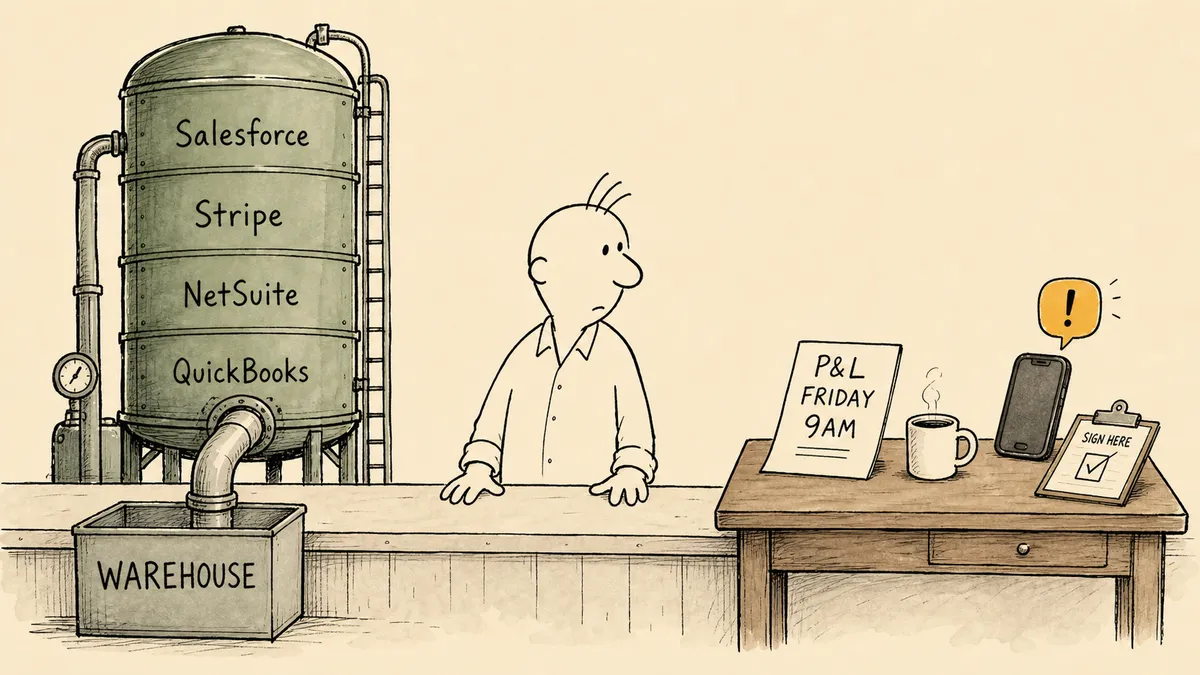
Fivetran moves data into your warehouse. FlowRunner generates the report, routes the approval, and chases the exception. The honest finance comparison.
Datasite owns the deal room. FlowRunner orchestrates the financial reconciliation and approval-chasing around it. Which fits depends on the deal.
SAP wins for organizations inside the SAP suite. FlowRunner wins when vendor onboarding has to ship this quarter without a multi-year suite rollout.
Vanta runs your SOC 2 program; SOX 404 is a different problem. When a GRC platform fits, when an orchestration layer fits, when both belong.
Workato is a mature enterprise iPaaS with a deeper connector library. FlowRunner is an orchestration layer built for finance teams who want to own the agent, not assemble recipes.
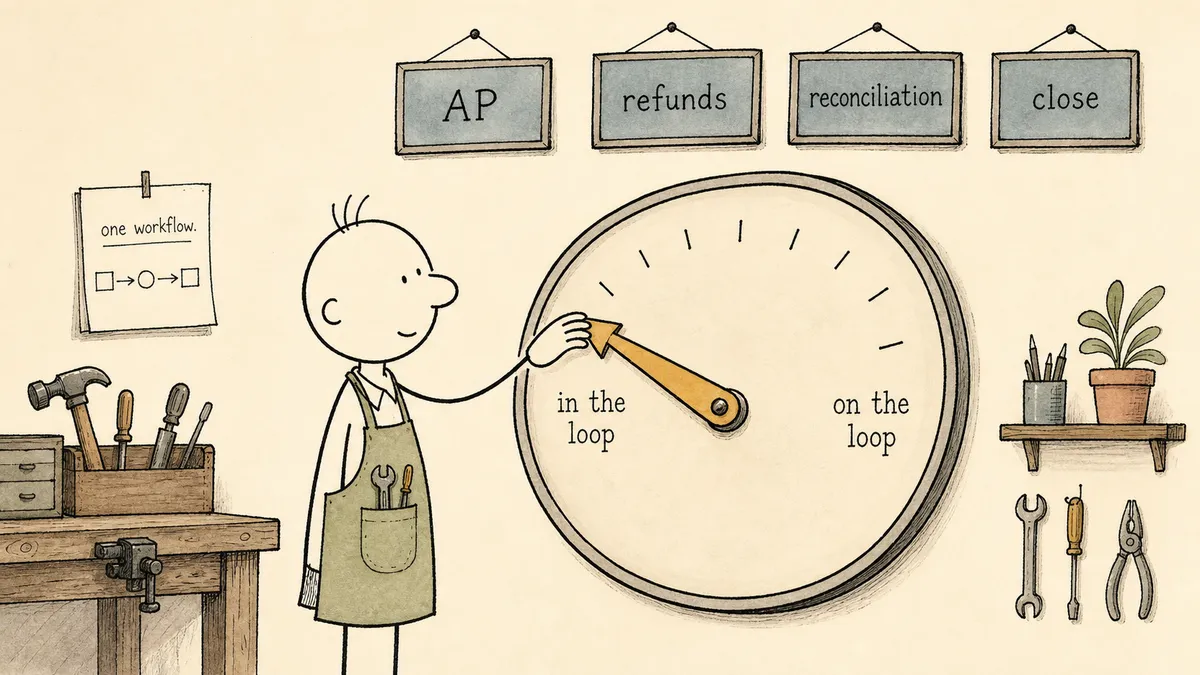
Human-in-the-loop and human-on-the-loop are not rival philosophies. They are settings on the same dial. Finance leaders set them per workflow.
Most reconciliation-tool roundups rank by match rate. For mid-market finance teams, the work lives in the 5 percent of items that miss. This is how to evaluate the category honestly.
Supplier onboarding is a structured sequence of intake, verification, risk review, system setup, and activation. The breakage is rarely in any single step. It is in the seams between them.
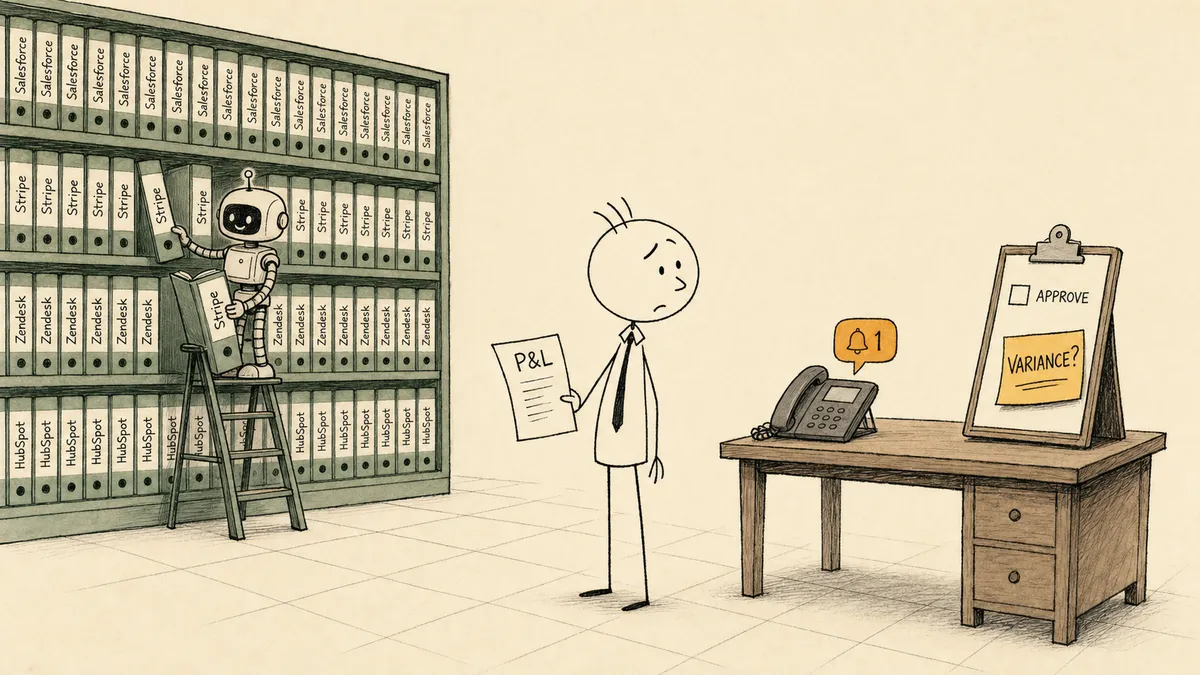
FloQast runs your close. FlowRunner orchestrates the reconciliation exceptions that live between Stripe, QuickBooks, Acumatica, and the inboxes your close software was never built to reach.
Procurify is a procure-to-pay application. FlowRunner is an orchestration layer. The honest comparison is about scope, not features, and most procurement teams need a clear answer to which problem they are buying for.
Most HIPAA software checklists are written for developers. This one is for the CFO signing the BAA, with six questions to ask before contract.
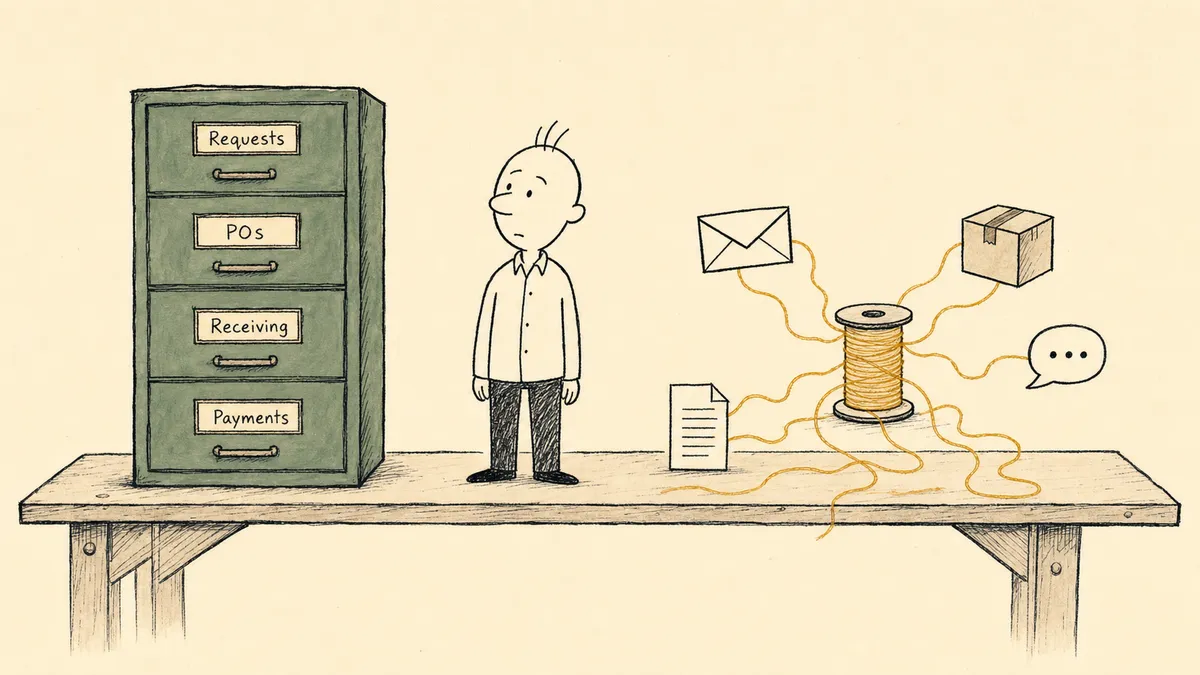
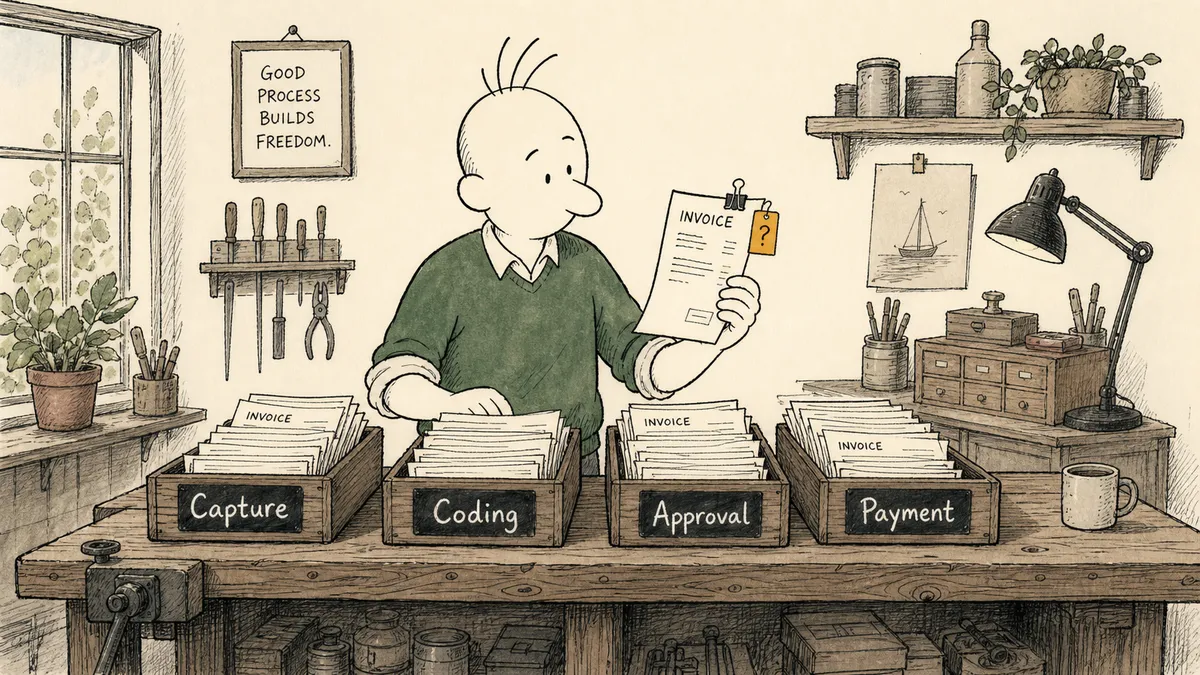
AP automation is a sequencing problem, not a tool problem. Get capture, coding, approval, and payment in the right order, and exceptions become the work.
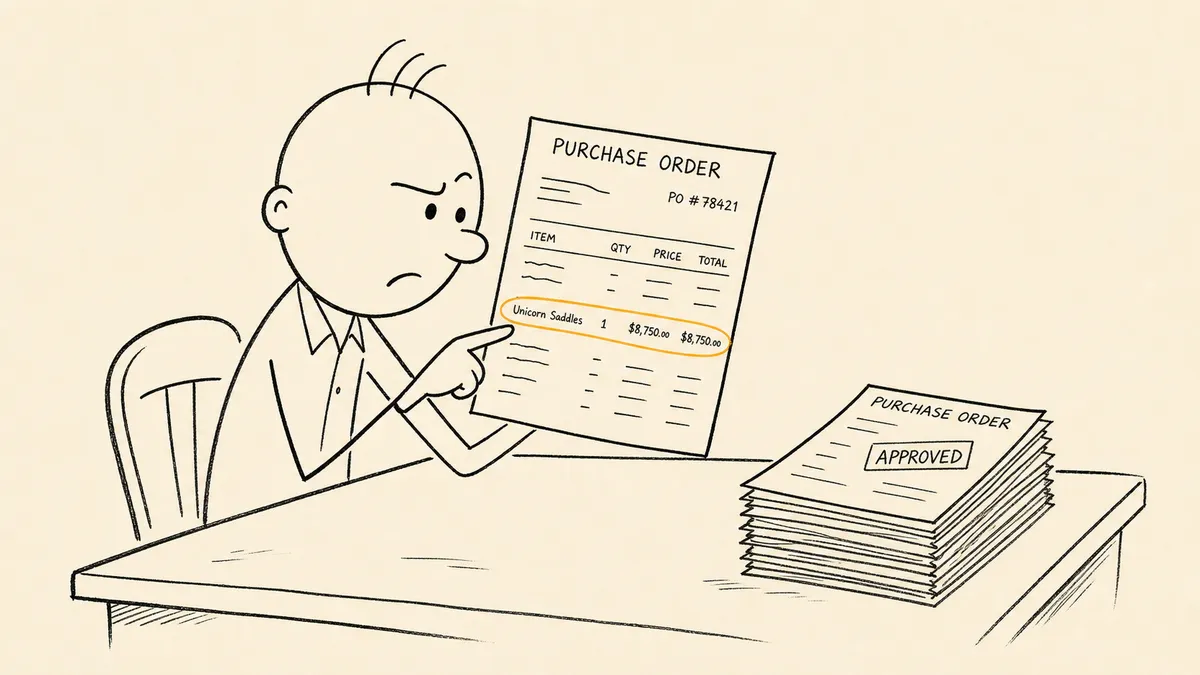
A PO approval workflow is the routing, thresholds, and audit trail behind every purchase. The ones that hold up are designed around exceptions.
HubSpot's predictive lead scoring is a closed model that ranks contacts by likelihood to close. What it does, what it hides, and where to use it carefully.
A post-M&A integration checklist for the CFO running the combined finance function, not the deal team: day one, 30 days, 90 days, and what slips.
An honest CFO read on QuickBooks automation: which workflows around AP, invoicing, reconciliation, and journal entries scale, and where human judgment stays.
A SOX compliance checklist organized around the controls that actually fail audits: approval evidence, segregation of duties, and reconciliation trails.
How Salesforce lead assignment rules work, the API and post-create gaps that quietly drop leads, and what to put around them so reps see the right inbound.
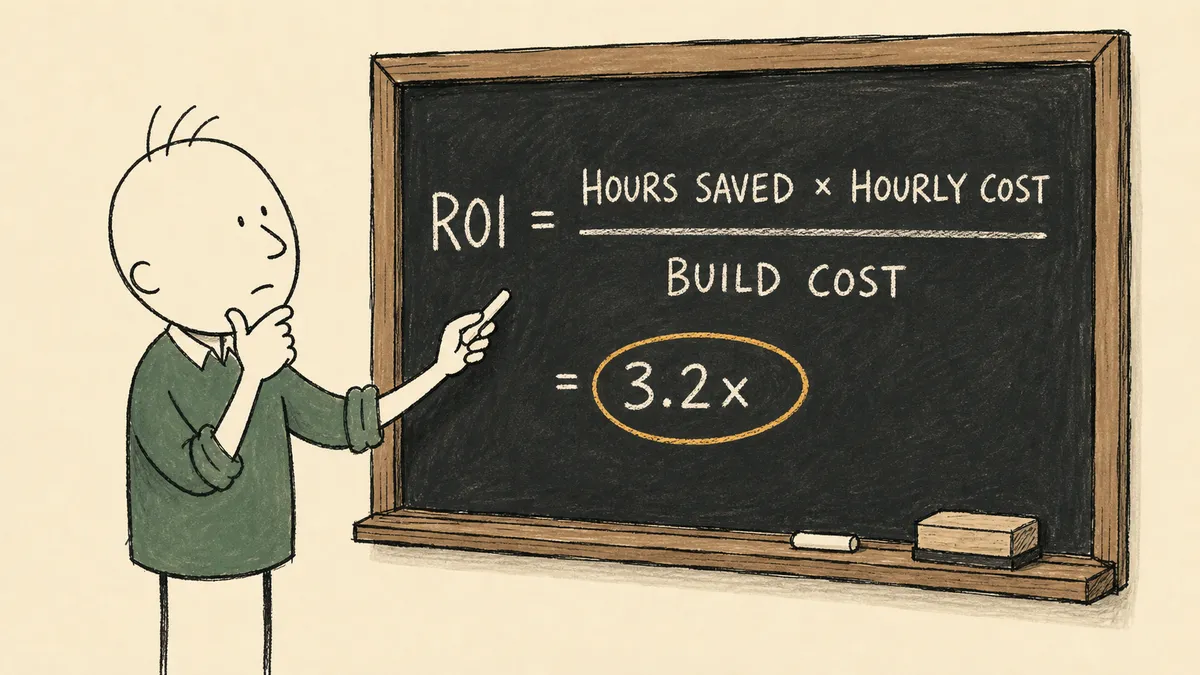
Automation isn't magic. It's math. Use this framework to identify workflows with the highest return on investment.
The difference between a good workflow and a great one comes down to when things happen.
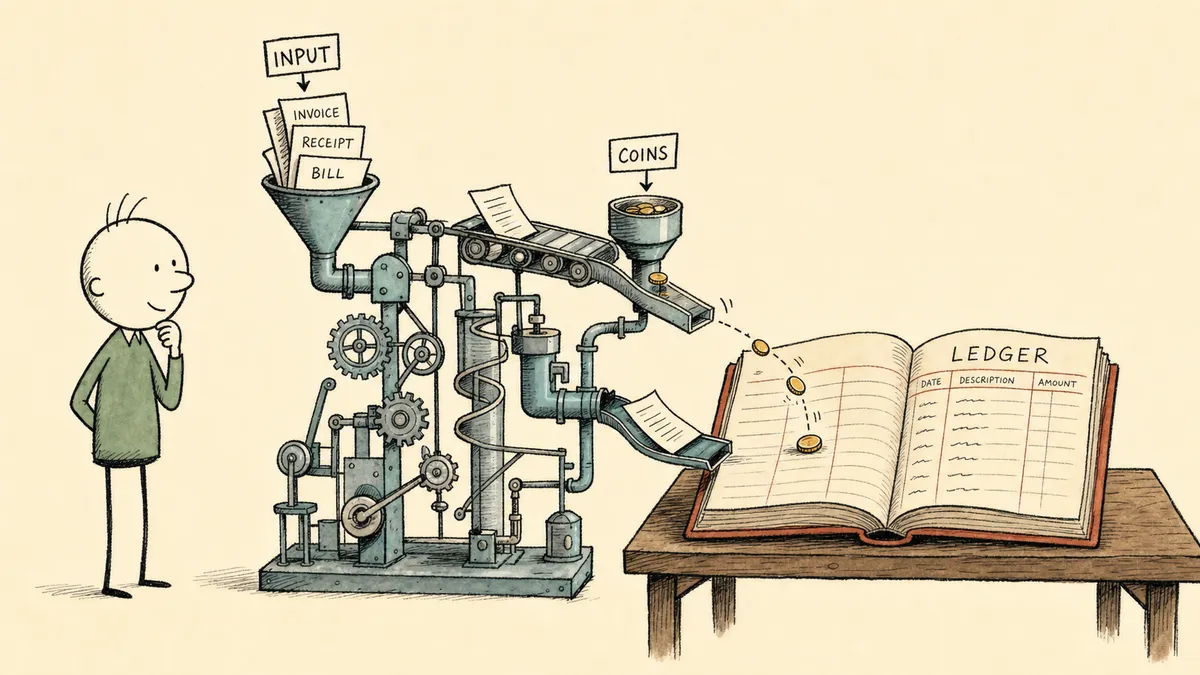
Automation often receives data in suboptimal formats. The Transform Data block reshapes messy, unstructured data into clean, predictable outputs.
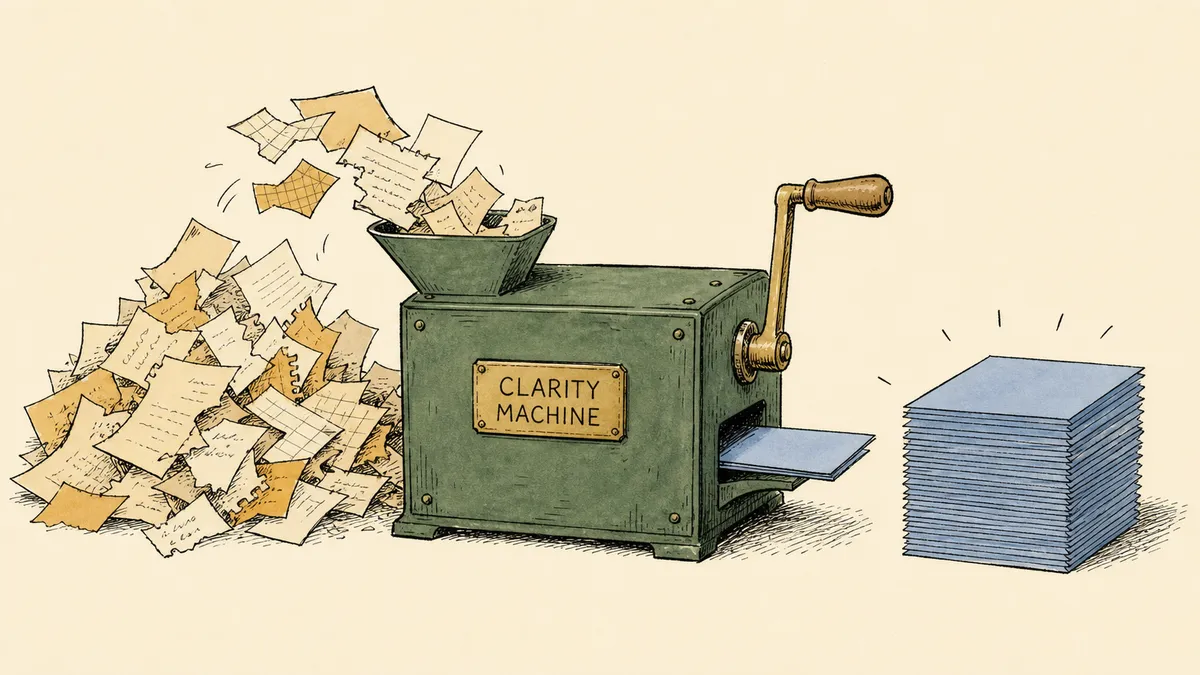
Transform disorganized workflow output into clear, labeled fields that teams can understand and reuse.
When multiple branches run in parallel, the Synchronize block ensures downstream steps receive complete data before continuing.
One of the most common mistakes companies make when implementing AI: treating automation and agents as the same thing.
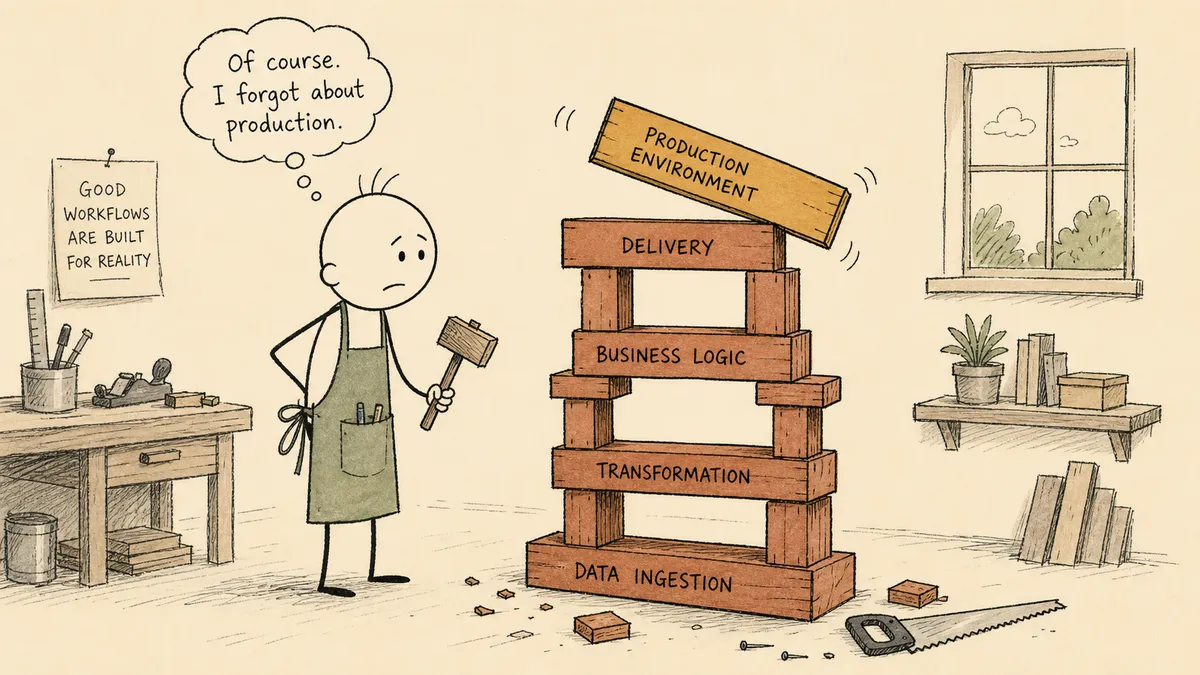
Your workflows don't fail because of tools. They fail because of how they're built.
A 30-minute walkthrough against your actual setup, or a quick message to scope the fit. No slides, no signup.