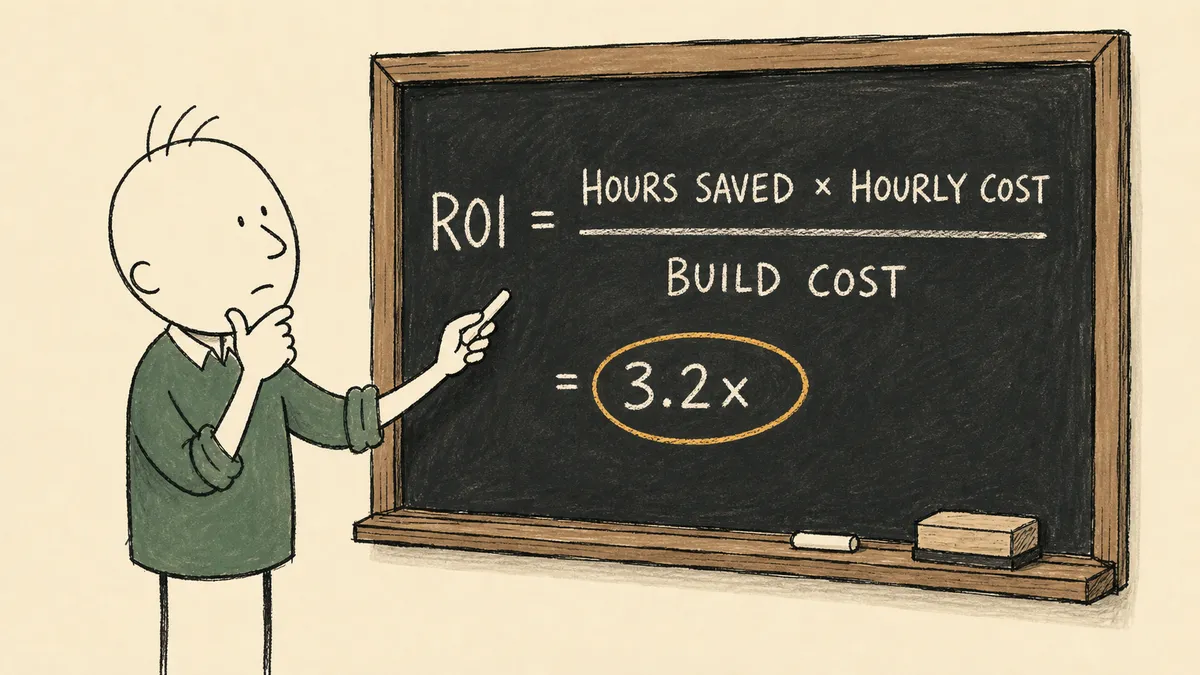
Not everything is worth automating. Rather than automating randomly, teams should use financial calculations to identify workflows with the highest return on investment.
The Core Principle
Automation isn’t magic. It’s math. Quantify pain points before building automation solutions.
The Basic Formula
Annual Hours = Frequency x Duration x 52 x People
With typical labor costs of $60-$90 per hour, even modest time savings compound quickly.
Three Cost Multipliers
Labor savings alone understate the value. Add these multipliers:
- Revenue uplift from faster processing
- Error-related expenses (refunds, penalties, rework)
- Compliance and regulatory risks
Illustrative Example: Lead Routing
Imagine a lead routing workflow processing 40 leads per week, 6 minutes each, across 2 people. That generates roughly 416 annual hours, which translates to a five-figure annual labor cost at typical loaded rates.
Now layer the multipliers. Faster lead response can lift conversion revenue. Avoided compliance penalties protect against fines. The total annual value of automating that single workflow can climb well past the labor savings alone.
Making the Case
Don’t tell executives a process “saves time.” Tell them what it’s worth in dollars. Financial framing changes the conversation from cost center to investment.