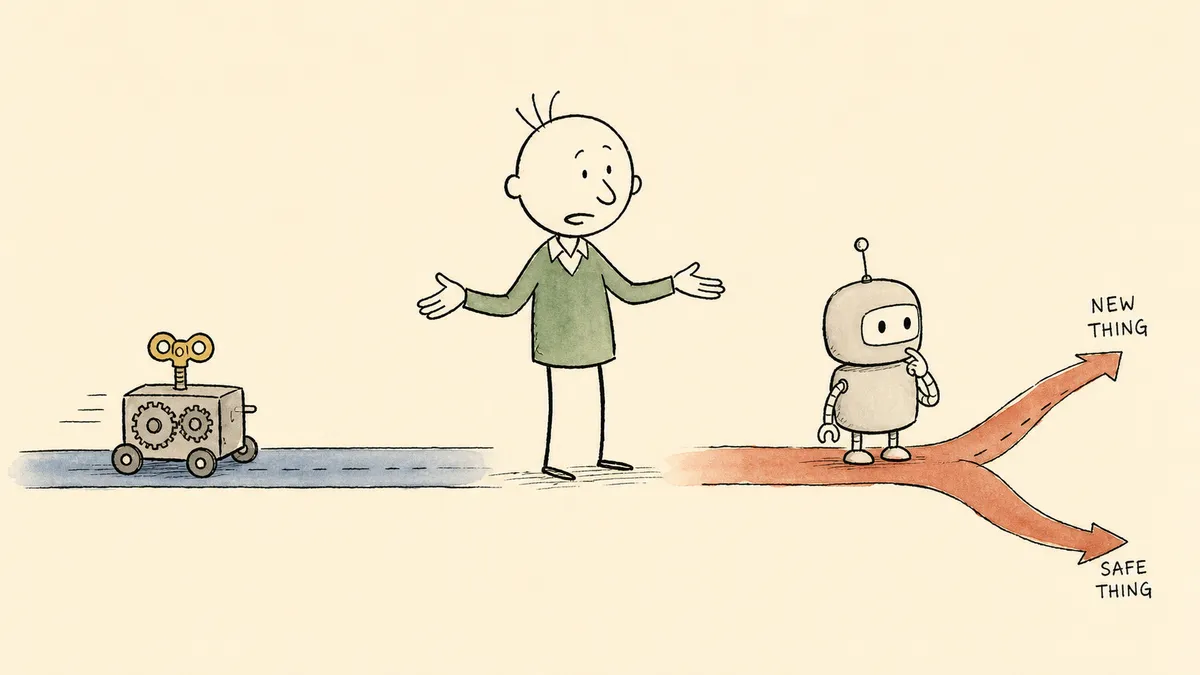
One of the most common mistakes companies make when implementing AI solutions is treating AI automation and AI agents as synonymous. They’re not. Understanding the distinction changes how you design, build, and scale your workflows.
The Core Distinction
Think of it as a driving analogy. Automation is the entire trip: the route, the schedule, the sequence of stops from start to finish. Agents are the drivers, specialized executors that make autonomous decisions within their domains, handling specific road conditions as they arise.
- Automation: End-to-end orchestration of sequential processes
- Agents: Autonomous decision-makers that handle specific task segments
The fundamental principle: agents drive, automation coordinates.
Business Implications
Confusing these concepts creates real operational problems:
- Assigning excessive responsibility to single agents
- Building poorly coordinated agent networks
- Overlooking workflow optimization opportunities
FlowRunner’s Approach
FlowRunner is a coordination layer. Think of it as the navigation system that orchestrates workflows while integrating agents through a visual interface. Agents do the driving. FlowRunner makes sure they’re on the right road, in the right order, at the right time.
Why This Matters
Understanding this distinction lets you design workflows that are efficient, reliable, and scalable. You stop overloading agents with coordination logic and start building systems where each component does what it’s best at.