ActiveCampaign + Google Sheets: Rows Become Synced Leads
Connect ActiveCampaign and Google Sheets so new rows sync into contacts automatically, with an AI agent that pauses for a human before a high-value deal is created.
How do you connect ActiveCampaign to Google Sheets?
Google Sheets’ On New or Updated Row trigger fires when a lead lands in your tracking sheet, and that trigger runs ActiveCampaign’s Sync Contact action to upsert the lead by email, apply a segment tag with Add Tag To Contact, and enroll it in an automation with Add Contact To Automation. FlowRunner is a visual AI-agent orchestration platform where automations run autonomously and pause for human judgment on the steps that carry real consequence. The same connection can run as a script that always does the same three steps, or as an AI agent that reads each row, decides how to handle it, and stops to ask a person before it commits a high-value deal to the pipeline.
The problem it solves
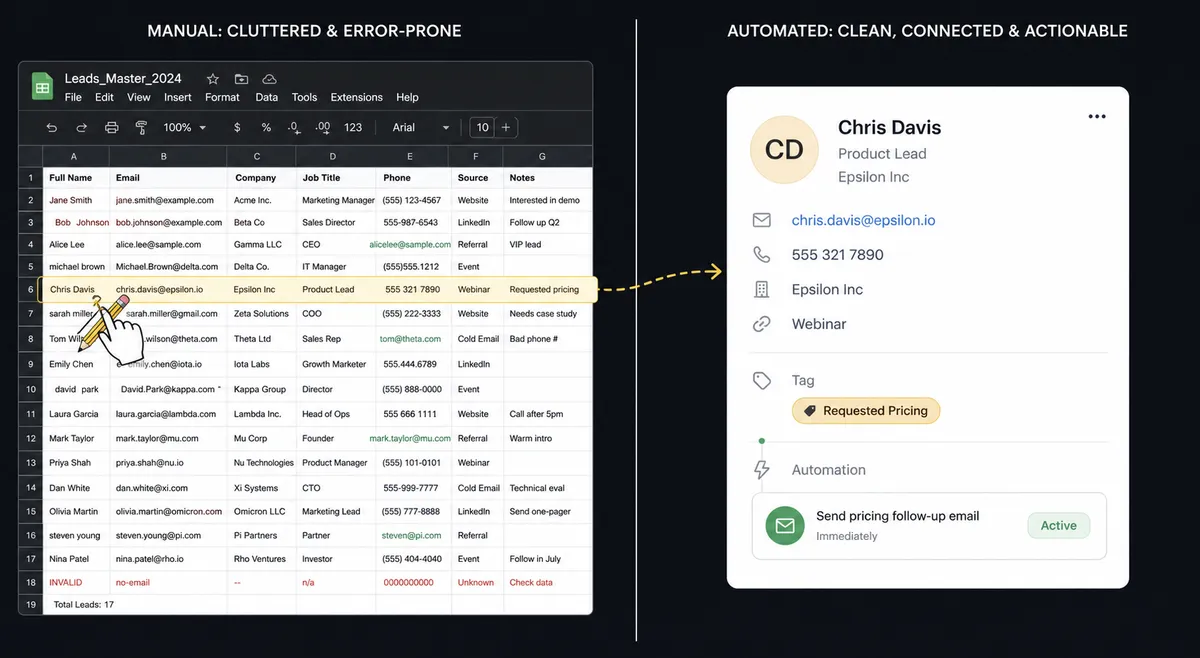
A marketer or ops lead keeps the real lead list in a spreadsheet because that is where sales, ops, and marketing all agree to look. New rows arrive from a form, an event list, or a partner export, and someone has to open ActiveCampaign, copy the row’s details in by hand, and remember which tags and automations that segment gets. When two people work the same sheet, or the same import runs twice, the same lead ends up as two contacts with two automation histories and no clean way to tell which one is current.
Segmentation lags behind capture. A row can sit in the sheet for a day or a week before someone gets to it, which means the automation that was supposed to greet a new lead within minutes goes out late, if it goes out at all. None of this is a skills problem. It is a spreadsheet doing the job of a system that should react the moment data changes, and a marketer spending their morning on data entry instead of the campaigns that require actual judgment.
How it works: the connection
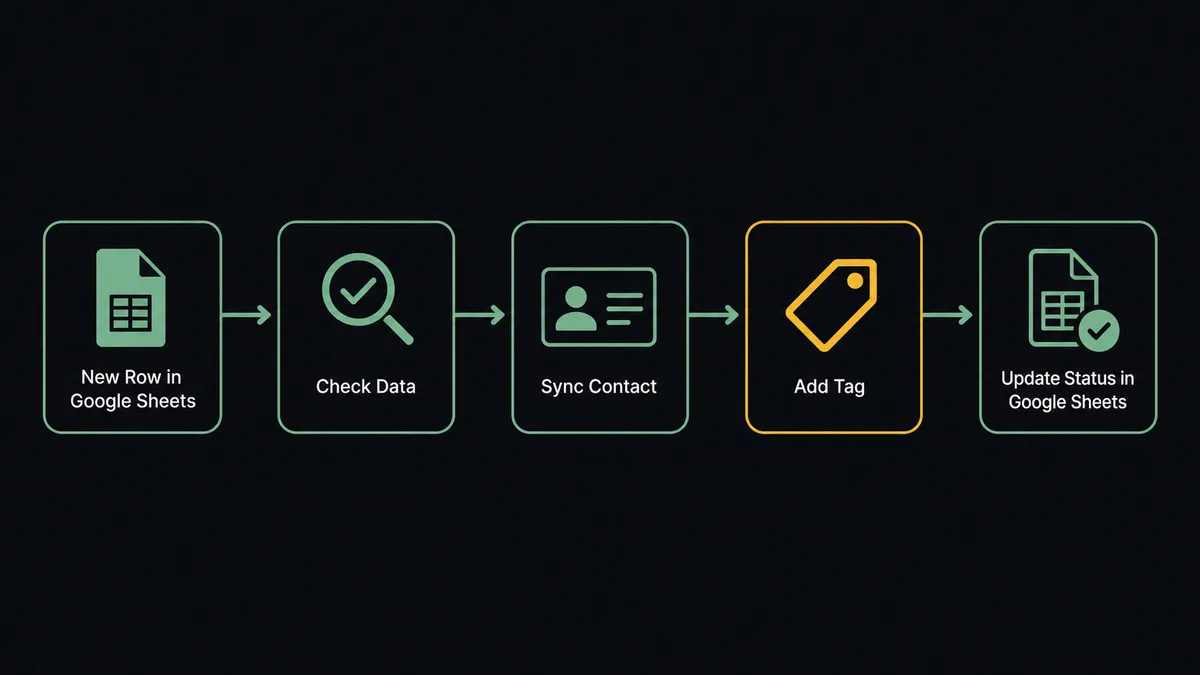
The flow starts on Google Sheets’ On New or Updated Row trigger, which fires on both fresh rows and edits to existing ones, so a corrected row gets reprocessed without a separate flow. The agent calls Get Rows to pull the new data and checks it against the columns set by Load Header Row, so it addresses “Email” or “Deal Value” by name rather than by column letter.
Once a row passes that check, the agent calls Sync Contact, which creates the contact or updates the existing one matched by email, so importing the same roster twice never produces a second copy. In the same run it applies a segment tag with Add Tag To Contact and enrolls the contact in the right sequence with Add Contact To Automation. If the row also represents a sales opportunity, the agent can open it with Create Deal, placing it on the correct pipeline and stage using List Pipelines and List Stages. Finally it writes the outcome back to the sheet with Update Cell, so anyone looking at the spreadsheet can see, at a glance, which rows are live in ActiveCampaign.
Can an AI agent run it? (and why a human stays in the loop)
A fixed sync tool would run Sync Contact, Add Tag To Contact, and Create Deal in the same order every time, with no judgment about what any individual row means. FlowRunner’s agent reads the row, reasons about it, and calls those same ActiveCampaign and Google Sheets actions as tools it chooses to use, in the order the situation calls for. This is not a sync tool. The agent knows when to stop and ask.
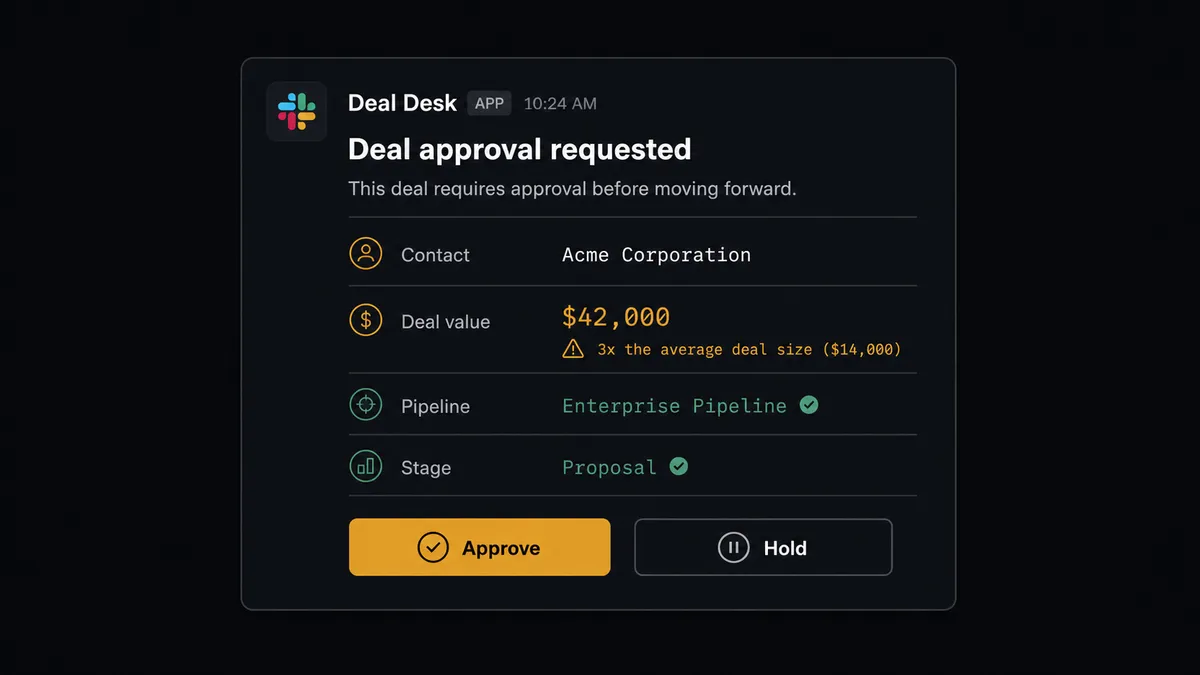
The moment that matters is Create Deal. Opening a deal commits an opportunity to the pipeline, and on a large account that commitment should not happen unsupervised. When the agent finds a row whose deal value clears the threshold you set, it does not create the deal. It packages the contact’s name, the deal value, and the pipeline and stage it would land on, and sends it to a sales manager on Slack: “New lead from the tracking sheet is a $42,000 opportunity, three times the average deal size from this source. Approve to open it on the Enterprise pipeline, or hold.” The manager approves and the agent creates the deal and enrolls the automation in the same run. The manager holds, and the deal waits, with the reason and the decision captured in the audit trail.
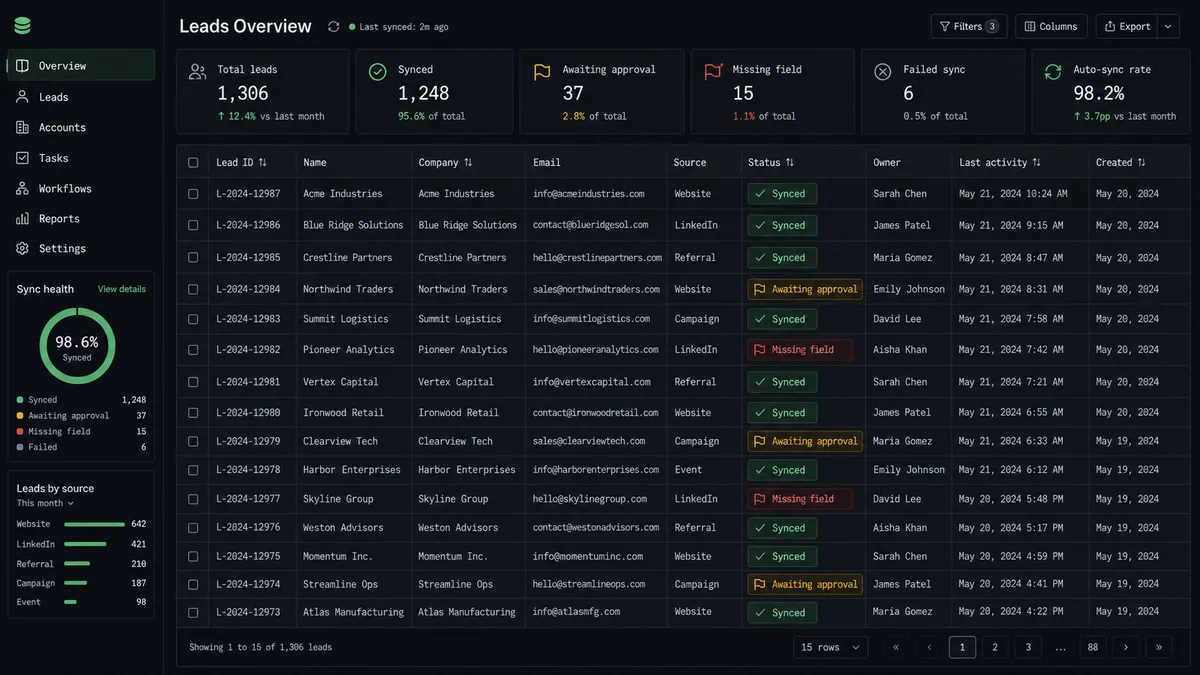
The same discipline runs on the Google Sheets side. When a row is missing a required field, the agent does not guess. It flags the row, marks it in the sheet, and routes it to the data owner: “Row 14 in ‘Inbound Leads’ is missing a value in the Email column. Correct the row and I will reprocess it, or tell me to skip it.” Clean rows flow through without anyone touching them. The rows that are ambiguous, or the deals that are large, get a person first.
FlowRunner vs Zapier
Zapier connects ActiveCampaign and Google Sheets natively, and for a non-technical marketer who just wants rows turning into contacts, it is genuinely quick to wire up. Where the two diverge is what happens on the steps that carry risk, and what the connection costs once volume grows.
| Capability | Zapier | FlowRunner |
|---|---|---|
| Human-in-loop on the risky step | A manual review app or a delay step you build and wire yourself | Native: the agent invokes a human-in-loop flow as a callable tool at the step that carries weight |
| Reasoning over each row | Filter and formatter steps follow fixed rules you define in advance | The agent reads the row and decides whether to sync, tag, escalate, or hold |
| Users included | Paid seats on the tiers with the automation depth this flow needs | Unlimited users on every tier |
| Pricing model | Per-task pricing that gets harder to predict as volume grows | Transparent workflow-based tiers with clear execution limits |
| Self-hosting | Not available | Self-hosted Community Edition free, self-hosted Enterprise for full compliance |
Before and after
| Category | Before | After |
|---|---|---|
| Lead entry | A marketer copies inbound spreadsheet rows into ActiveCampaign one contact at a time | Sync Contact upserts the lead the moment the row lands, matched by email |
| Duplicates | The same lead enters twice because no upsert runs before create | Sync Contact prevents the duplicate automatically |
| Segmentation | Tags and automation enrollment wait for someone to get to them | The agent tags and enrolls the contact in the same run |
| Row status | A new row sits until a person notices it and acts | A new or updated row triggers the sync immediately, and the sheet shows a status back |
| Reporting | Each report is produced by opening the sheet and downloading a file | Sheets export on a schedule without anyone opening them |
What you can build
Bulk lead import without duplicates. The agent calls Get Rows to load a full roster from Google Sheets and Sync Contact to upsert each one into ActiveCampaign matched by email, so importing the same list a second time never doubles your contact count.
Won deals logged automatically. The On ActiveCampaign Event trigger fires when a deal moves to won, and the agent calls Add Row to log the closed deal in a revenue tracking sheet the finance team already watches.
Scheduled pipeline reports. On a schedule, the agent calls Export Sheet to generate a file of current pipeline data and delivers it as an attachment, so the sales team gets a report without opening the spreadsheet.
Row validation before it reaches ActiveCampaign. The agent checks each new row against the mapped header before calling Sync Contact, and any row missing a required field is flagged for a human instead of syncing incomplete data.
High-value deal approval. A large opportunity surfaced from a synced lead pauses for a sales manager’s approval before Create Deal commits it to the pipeline.
Common questions
Is it free to connect ActiveCampaign and Google Sheets on FlowRunner? FlowRunner has a free plan with 100 executions a month, every integration included, and no credit card required, and new accounts get 14 days of Professional on top. Beyond the free plan, Growth starts at $45/mo for 12,000 executions.
Can I self-host the ActiveCampaign and Google Sheets connection? Yes. The Community Edition is free for a single self-hosted instance, and the self-hosted Enterprise tier adds multi-instance clustering and the full compliance suite for teams that need data to stay on their own infrastructure.
Does the agent need my own OpenAI key? FlowRunner uses a bring-your-own-key model, so you connect the AI provider you already use and the agent runs on your key rather than a shared pool.
What happens when the agent isn’t sure a row is valid? The agent does not push an incomplete row into ActiveCampaign. It flags the row in the sheet, sends the owner a message naming the missing field, and reprocesses only what comes back approved or corrected.
Does this replace the automations I already built in ActiveCampaign? No. FlowRunner is the layer that feeds ActiveCampaign clean, deduplicated data and knows when to pause for a person; your existing ActiveCampaign automations still run once the contact lands.
Can the flow run in reverse, from ActiveCampaign into Google Sheets? Yes. The On ActiveCampaign Event trigger can fire when a deal moves to won, and the agent calls Add Row to log the win in a revenue tracking sheet, or Export Sheet to deliver a scheduled report.
Getting started
FlowRunner has a free plan with 100 executions a month, every integration included, and no credit card required, and new accounts get 14 days of Professional on top. Start at flowrunner.ai to build the flow yourself, or book time at calendly.com/flowrunner/intro to walk through the deal-approval threshold and row-validation rules with the team.
Frequently asked questions
Is it free to connect ActiveCampaign and Google Sheets on FlowRunner?
FlowRunner has a free plan with 100 executions a month, every integration included, and no credit card required, and new accounts get 14 days of Professional on top. Beyond the free plan, Growth starts at $45/mo for 12,000 executions.
Can I self-host the ActiveCampaign and Google Sheets connection?
Yes. The Community Edition is free for a single self-hosted instance, and the self-hosted Enterprise tier adds multi-instance clustering and the full compliance suite for teams that need data to stay on their own infrastructure.
Does the agent need my own OpenAI key?
FlowRunner uses a bring-your-own-key model, so you connect the AI provider you already use and the agent runs on your key rather than a shared pool.
What happens when the agent isn't sure a row is valid?
The agent does not push an incomplete row into ActiveCampaign. It flags the row in the sheet, sends the owner a message naming the missing field, and reprocesses only what comes back approved or corrected.
Does this replace the automations I already built in ActiveCampaign?
No. FlowRunner is the layer that feeds ActiveCampaign clean, deduplicated data and knows when to pause for a person; your existing ActiveCampaign automations still run once the contact lands.
Can the flow run in reverse, from ActiveCampaign into Google Sheets?
Yes. The On ActiveCampaign Event trigger can fire when a deal moves to won, and the agent calls Add Row to log the win in a revenue tracking sheet, or Export Sheet to deliver a scheduled report.